

10mm, 15mm or 28mm? How to choose a scale for your wargame
10mm is for whole armies and big battles, 15mm for historical battles with a little more detail, and 28mm for skirmish games where every model is a character. Here's the same figure in all three scales, what the numbers mean and how to choose.

Updated 6 min readAll scales

On this page
There's no single best scale for wargaming: the right one depends on the game you want. Wargaming scales are named after the height of a man on the table, measured roughly to his eyes. That one number decides almost everything else: how many figures fit on your table, how long each takes to paint, how much detail you'll see and what kind of game you'll play. Here's the same figure in all three of our scales, and what each one is best at.
- 10mm
- Whole armies, mass battles
- 15mm
- Big historical battles
- 28mm
- Skirmish, characters, kits
- See them at true size
- Our size guide
What do 10mm, 15mm and 28mm mean?
The number is roughly how tall a man stands on the table, usually measured from the soles of his feet to his eyes. So a 28mm figure of a man is about 28 mm to the eyes, and a little over 30 mm to the top of his head. As a ratio, 28mm is roughly 1:56, 15mm roughly 1:100 and 10mm roughly 1:160, though no two makers measure quite the same way.
28mm vs 32mm
Over the years many 28mm ranges have grown, with bigger heads, hands and weapons that read better on the table. This "heroic" style is often sold as 32mm. The figures mix happily with 28mm in most armies, but a slim, true-to-life 28mm figure can look small beside a chunky 32mm one, so it's worth keeping each unit to one range.
The same figure, three ways
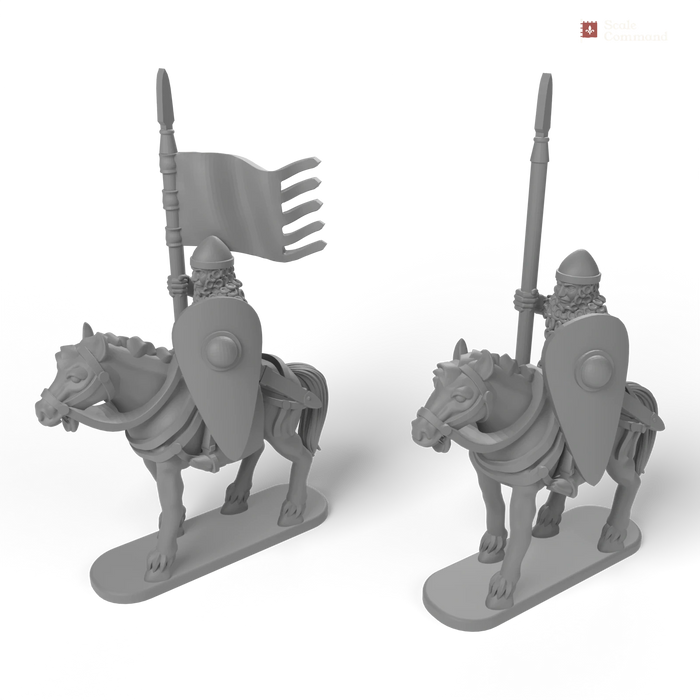
Many of our Ten Kingdoms Miniatures figures come in more than one scale. The Georgian Armoured Banner Horse comes in all three, and measured from the base to the tip of the banner pole it stands 31 mm tall in 10mm, 43 mm in 15mm and 67 mm in 28mm. The picture at the top of this article shows the three side by side at their true relative size.
The bigger figure isn't just bigger. It has room for more detail: the rider's face, the stitching on the harness, the boss on the shield. The smaller ones trade that detail for numbers, and numbers are what make a battle look like a battle.

10mm: the whole battle on one table
At 10mm you play with armies, not squads. Units are groups of figures on one stand that move and fight together, and a few hundred figures fit on an ordinary dining table. The lines look like real battle lines, flanks and reserves actually matter, and a cavalry charge sweeps across the table instead of nudging forward a few inches.
Our biggest 10mm range is Wakes Emporium's 10mm fantasy range, War of the Ring: spearmen, knights, rangers, trolls, war elephants and siege engines. Five of its factions come as army bundles for 10% less than their packs bought one by one, and the elf, horse lord and goblin armies come whole; the White Tree Kingdom bundle alone is 13 packs: 340 figures on foot, 14 mounted, plus heroes, command vignettes and war machines. For history, Ten Kingdoms' 10mm historical range covers medieval Georgia and India. See everything in 10mm, or just the 10mm fantasy.


Is 10mm too small to paint?
No: paint the unit, not the figure. Strong, simple colours, a wash and a drybrush do most of the work, because at arm's length nobody sees eyes, they see the colour of a whole regiment. So whole units paint quickly.
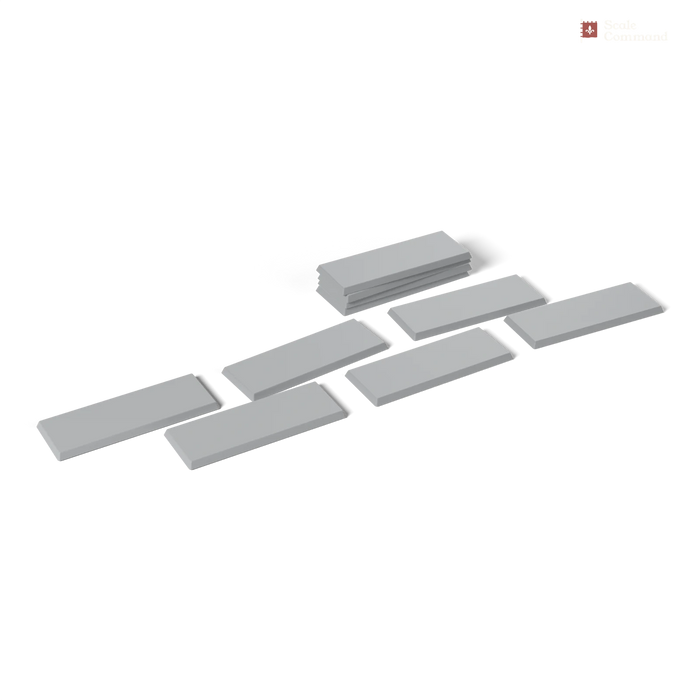
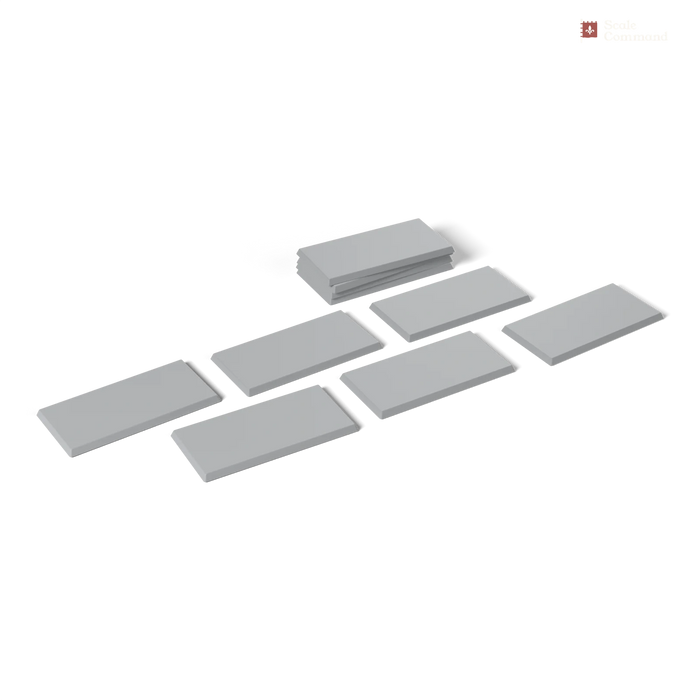
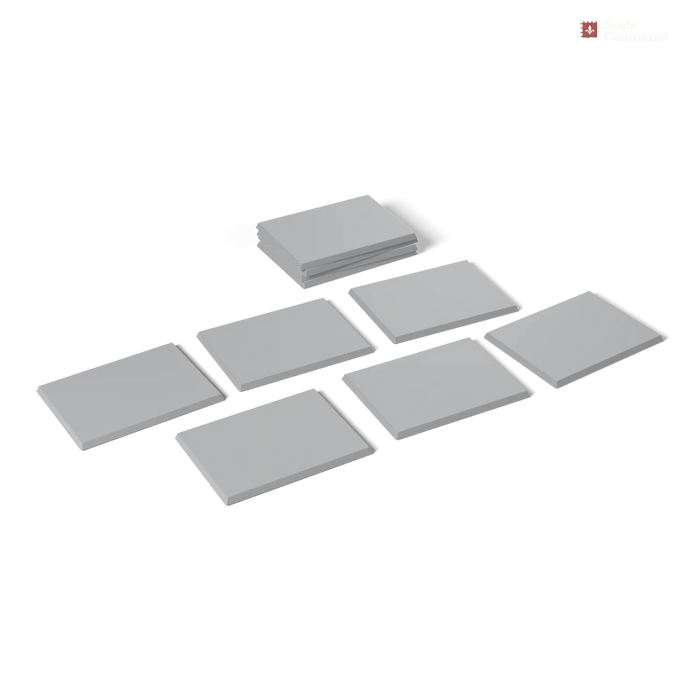
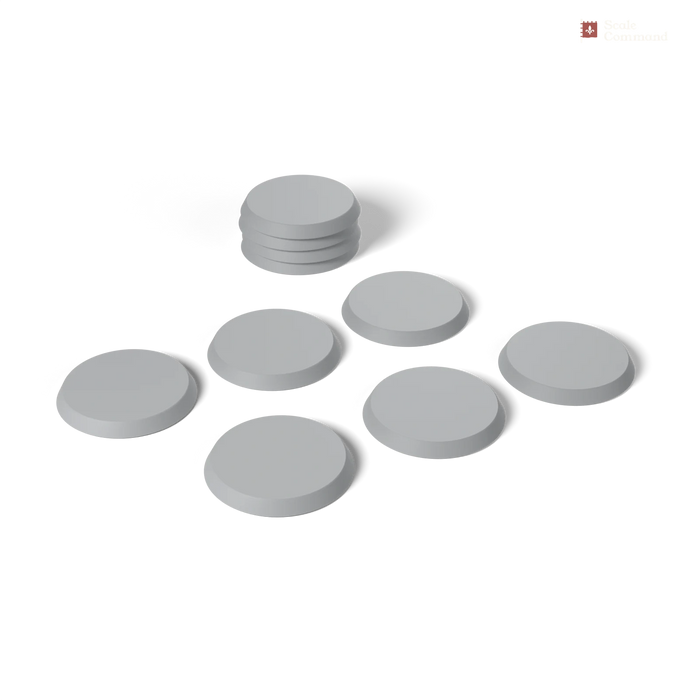
Basing 10mm: the figures go onto rectangular stands. Our Movement Plates are 40 mm wide, the frontage most historical rules use at 10mm and 15mm, with a flat top wide enough for Wakes Emporium's 36.5 mm strips. There's little room between the figures, so keep the base simple: fine sand, a broad earth colour, a drybrush and a scatter of flock. Grass tufts and sculpted basing bits are too big at this size and crowd the figures.
15mm: historical armies with room for detail
15mm is the classic scale for historical wargaming. 10mm vs 15mm: both put whole armies on the table, but 15mm figures are half as tall again, so faces, shields and kit read better from arm's length, while 10mm fits more figures in the same space. It still gives you big armies and real battle lines, but each figure is large enough to show its kit: the cut of a coat, a shield design, the difference between a spearman and a sergeant. Units go on stands, like 10mm, usually on the same 40 mm frontages.
We stock 15mm medieval Georgian and Indian armies from Ten Kingdoms and 15mm figures from Reconquer Designs, including their 14th Century Sergeants. Browse everything in the 15mm range.
Painting 15mm: the same speed techniques as 10mm work well, with one extra step where it shows: a highlight on faces, hands and shields.
28mm: characters, kits and skirmish
28mm is the scale you probably picture when you think of miniatures. Each figure is a little character with a face, a pose and room for freehand on its shield, and games tend to be skirmishes of a few dozen figures, where every model has its own base and its own story. It's also the scale for dioramas and display pieces.
Our 28mm range, mostly historical, covers Ten Kingdoms' medieval Georgians and their neighbours, Reconquer Designs' Reconquista knights, crossbowmen and jinetes, and their Medieval Life townsfolk and buildings, from the Medieval Inn to the Medieval Tanners.


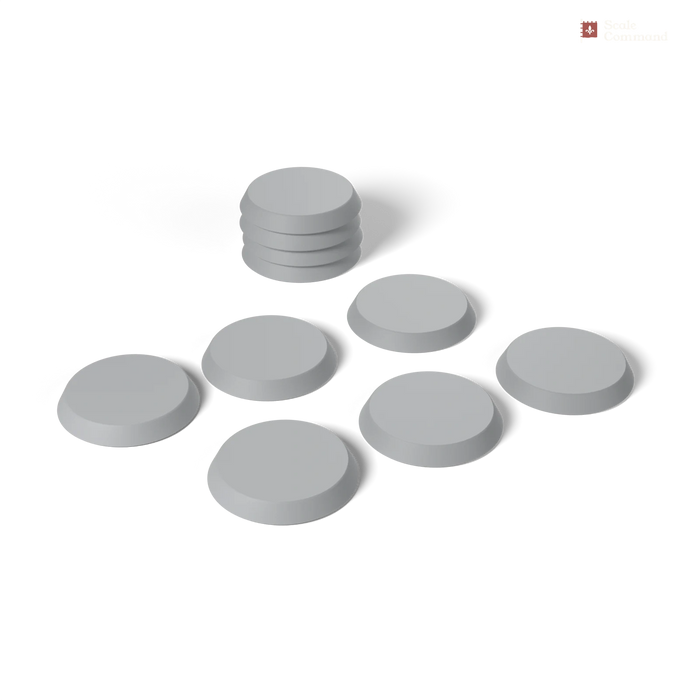
Basing 28mm: every figure gets its own base. Our Round Bases come in 25mm, the classic size for 28mm foot figures, 32mm, the usual infantry size in today's fantasy and sci-fi games, and 40mm for heroes. Ten Kingdoms figures stand on small sculpted footplates and Reconquer Designs figures come without bases, so both glue straight on.
Side by side
| 10mm | 15mm | 28mm | |
|---|---|---|---|
| Rough ratio | About 1:160 | About 1:100 | About 1:56 |
| Our banner bearer | 31 mm tall | 43 mm tall | 67 mm tall |
| Best for | Mass battles, whole armies | Historical battles | Skirmish, characters, display |
| Figures on the table | Hundreds | Hundreds | Dozens |
| Based on | Stands of several figures | Stands of several figures | One base each |
| Painting | Fast: colour, wash, drybrush | Fast, plus faces and shields | Every detail shows |
| Our ranges | Wakes Emporium fantasy, Ten Kingdoms | Ten Kingdoms, Reconquer | Ten Kingdoms, Reconquer |
Terrain and basing bits for each scale
Terrain has to match the scale too. Our texture rollers come in two sizes: the 28mm rollers, and a set made for 10mm and 15mm where the same patterns are smaller and shallower. A cobblestone is about 3 mm across on the 28mm Cobblestones roller and about 2 mm on the 15mm one. Brick, Herringbone and Tread Plate are 28mm only, because at 15mm the bricks would be too small to print cleanly.
All our basing bits are made for 28mm figures, and suit 32mm bases too. At 10mm and 15mm, base with colour and texture instead: sand, a drybrush and flock, and save the sculpted bits for a 28mm army or a scenic objective.
What's the best scale for wargaming, and for beginners?
Start with what you want to see on the table. If it's a whole battle, with lines of spears and a reserve waiting behind, go 10mm or 15mm. If it's a handful of heroes with faces you can paint, go 28mm. Then pick one army and stick to one scale for it, because figures from different scales look odd side by side. Every model we sell, in every scale, is printed in resin, which keeps the detail even at 10mm (why resin, not filament).
Our size guide shows the three scales at true size on your screen. If you'd like a second opinion, ask us: we're happy to help you plan a first army.
-
 CavalryCommandTen Kingdoms Miniatures Georgian Armoured Banner Horse Cavalry · Command · 1 model From $1.0028mm & 15mm & 10mm
-
 New
SpearmenArchersSkirmishers
-
 SpearmenReconquer Designs 14th Century Sergeants with Spears and Hand Weapons Spearmen · 12 models From $21.0028mm & 15mm



Questions and answers
- What does 28mm scale mean?
- 28mm scale means a man stands about 28 mm tall on the table, usually measured from his feet to his eyes, so about 30 mm to the top of his head. As a ratio that's roughly 1:56. Makers measure slightly differently, so figures from different ranges can vary a little in size.
- What's the difference between 15mm and 28mm miniatures?
- A 28mm figure is nearly twice as tall as a 15mm one and has far more room for detail, so 28mm suits skirmish games where every model has a name. 15mm figures go on shared stands in large units, which suits big historical battles on an ordinary table.
- Is 10mm too small to paint?
- 10mm miniatures aren't too small to paint, but they're painted differently. Strong block colours, a wash and a drybrush do most of the work, because at arm's length you see the colours of a whole unit rather than each face. Whole units paint quickly, which suits big armies.
- Which wargaming scale is best for beginners?
- The best scale for a beginner depends on the game. For skirmish games with a few dozen models, start with 28mm, which is easiest to see and paint in detail. For big battles, 10mm or 15mm gets a whole army on the table quickly. Choose one army and keep it to one scale.
- Can you mix 10mm and 15mm miniatures?
- Mixing 10mm and 15mm miniatures in one army doesn't work well, because a 15mm figure is half as tall again as a 10mm one and units look mismatched side by side. Different makers' figures in the same scale also vary, so keep each unit to one range where possible.
- What scale is 15mm as a ratio?
- 15mm scale is roughly 1:100, which means a man stands about 15 mm tall from his feet to his eyes. 10mm scale is roughly 1:160, close to N scale model railways, and 28mm is roughly 1:56. Makers measure a little differently, so treat every ratio as approximate.
Shop this article
-
-
 New
-
Heavy cavalry
-
Spearmen
-
Civilians
-