

3D printingTerrainModelsHobby gear
Resin vs filament for miniatures: where each 3D printer wins, from 10mm armies to paint racks
Resin is better for miniatures: its 0.03–0.05 mm layers and 14–19 micron pixels keep faces and fine detail that a filament printer's 0.4 mm nozzle can't. Filament is better for big, tough things like terrain boards and paint racks. Here's how each one does on everything we make.

Updated 10 min readAll scales

On this page
Our workshop runs two kinds of 3D printer side by side: a resin printer and a filament printer. They're good at completely different things. Here's what each one does with the things we actually make, from 10mm armies and 28mm heroes to texture rollers, terrain, bases and paint racks, and why we print each one the way we do.
- Resin printers to look at
- ELEGOO Mars and Saturn
- Filament printers to look at
- Bambu Lab A and P series
- Resin layers
- 0.03–0.05 mm
- Filament layers
- 0.1–0.2 mm
The short answer
- Miniatures, 10mm to 28mm: resin. Faces, mail, shield designs and fingers need its fine detail. A standard 0.4 mm filament nozzle can't draw 10mm figures, and even a fine 0.2 mm nozzle loses the faces and spear points.
- Texture rollers: resin. The pattern has to be crisp all the way round, or every flaw rolls into your clay.
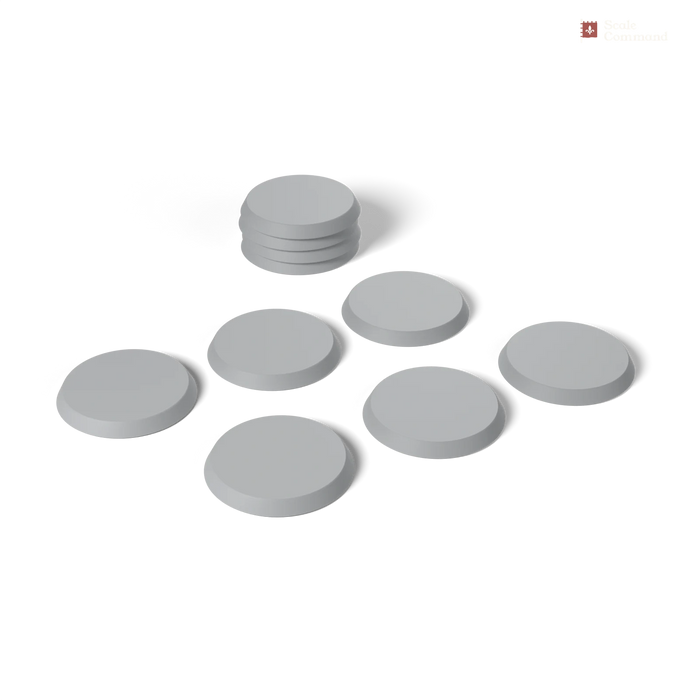
- Bases and basing bits: resin, for sharp edges and fine texture. They come to you on their print sprue, like a plastic kit.
- Terrain: it depends on the size. Detailed buildings and scatter print beautifully in resin; big, plain pieces like hills, walls and boards are better in filament.
- Paint racks and hobby gear: filament, every time. It's tough, light and cheap to print big. This is where filament thrives.
Why do resin prints have more detail than filament?
A resin printer (the proper name is MSLA, masked stereolithography) has a tank of liquid resin over a screen. The screen shines UV light through the exact shape of one thin slice of the model, and wherever the light lands, the resin hardens. The build plate lifts, the next slice is lit, and the model grows upside down, hanging from the plate. On a 16K screen each pixel is only about 14 by 19 microns (thousandths of a millimetre), finer than a human hair. Any modern resin printer, 8K, 12K or 16K, draws far finer than a filament nozzle; the difference between those screens is small next to that gap.
A filament printer (FDM, fused deposition modelling) works like a very precise hot glue gun. A spool of plastic, usually PLA, feeds into a heated nozzle that draws each layer as a thin bead of melted plastic. The usual nozzle is 0.4 mm wide, so that's the finest line it can draw, and layers are 0.1 to 0.2 mm thick. In return it builds big: a typical modern filament printer prints anything up to about 256 mm in every direction, several times the volume of a resin printer's tank.
Can a filament (FDM) printer print 10mm miniatures?
Verdict: resin, and it isn't close. At 10mm a whole figure is about the size of your little fingernail. Our 10mm fantasy range from Wakes Emporium comes as strips of figures standing shoulder to shoulder: White Tree Spearmen, for example, are six to a 37 mm strip, with spear shafts only about half a millimetre thick. A standard filament nozzle draws a line 0.4 mm wide, so it would draw each spear with one or two lines and each face with a handful of blobs. A finer 0.2 mm nozzle and files made for filament printers help, but the faces and spear points still come out soft. Resin draws them cleanly, down to the shield designs.

The same goes for our 10mm historical figures from Ten Kingdoms Miniatures, like the Georgian Bow Foot, which stand about 16 mm tall, bow and all. At 15mm, with figures about half as tall again, the gap narrows a little, but the same holds: faces, shields and weapons need resin's detail. For crisp 10mm and 15mm armies, resin is the way to go.
-
 New
Spearmen
-
New
Heavy cavalry
-
New
SpearmenArchersSkirmishers


Can you 3D print 28mm miniatures on a filament printer?
Verdict: you can, but resin is far better. A filament printer can print a 28mm figure, especially with a smaller nozzle and fine layers, and some gamers do it for cheap proxies. But the result is soft: faces lose their expression, mail turns to texture, and curved surfaces like helmets and shields show a ridge at every layer. Resin keeps all of it. That matters most on kits with small parts, like Reconquer Designs' 14th Century Sergeants, which come with a falchion, a sword, a polearm, a winged lance, scabbards and three shield designs to swap in.


Every miniature in the shop, in 10mm, 15mm and 28mm, from Ten Kingdoms, Reconquer Designs and Wakes Emporium, is printed to order in resin from the designer's licensed files. Not sure which scale suits your games? See 10mm, 15mm or 28mm: how to choose a scale.
Texture rollers: why ours are resin
Verdict: resin. A texture roller presses its pattern into clay, putty or foam, so any flaw on the roller is copied into every strip you roll. Our rollers are 100 mm long and 30 mm across, with patterns 0.6 to 1.4 mm deep. Printed in filament, every layer line runs right round the roller and rolls into the clay as fine ridges; printed lying down, the curve comes out in steps. Resin draws the pattern crisply all the way round, and the tapered sockets for the handles come out smooth and true, so they wedge in and hold.


Is resin or filament better for terrain?
Verdict: it depends on the size. Terrain is where the choice gets interesting. Buildings and scatter full of planks, thatch, stonework and props look their best in resin, which is how we print Reconquer Designs' Medieval Life range. The Medieval Inn, for example, is designed floor by floor so each piece fits a resin printer's plate, and it comes with its bar, tables, benches and kegs.


Big, plain terrain is a different story. Hills, rock outcrops, ruined walls, gaming boards and modular tiles are mostly volume, not fine detail. A filament printer builds them in one piece, cheaply and quickly, and they're light and tough enough to survive years in a tub. Printing the same pieces in resin would cost several times as much, weigh a lot more and chip more easily at the corners. If you print terrain at home, filament is the one to start with.
Paint racks and hobby gear: where filament thrives
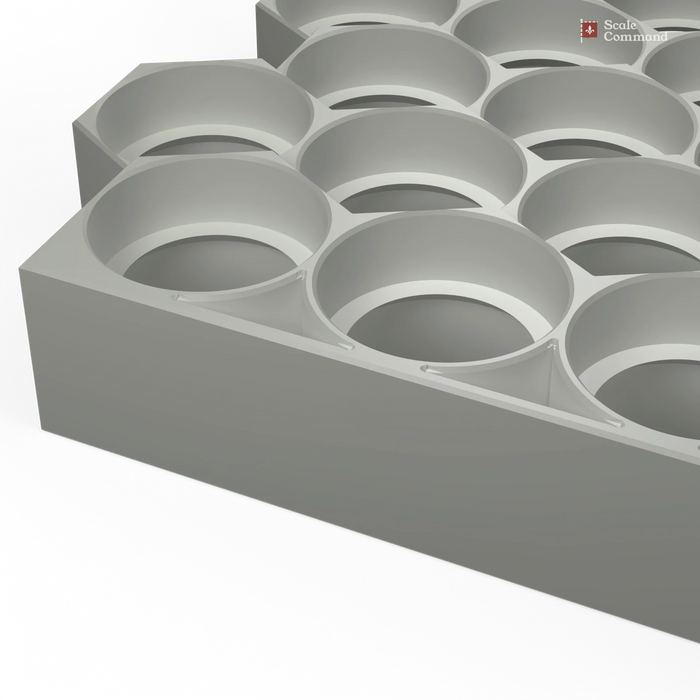
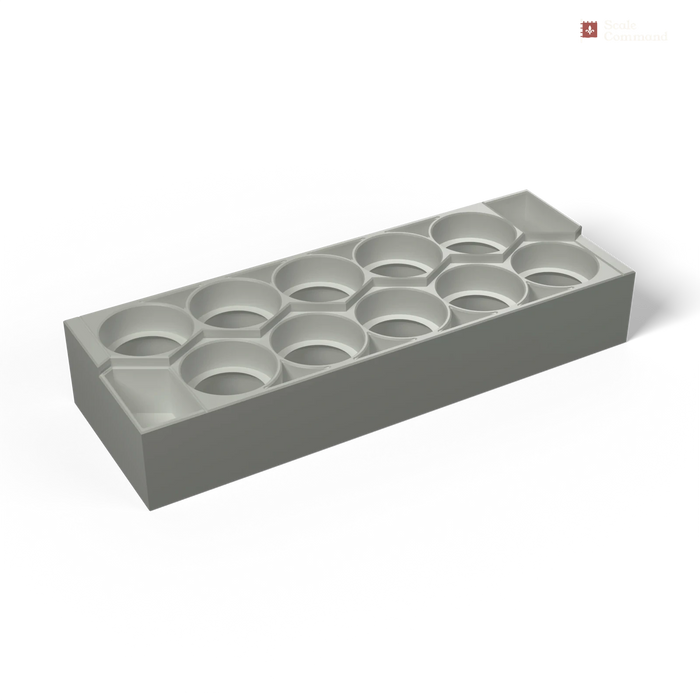
Verdict: filament, every time. Our Paint Hive racks are where filament wins outright. A Paint Hive is 198 by 166 mm with 25 stepped wells, and it's handled every day: pots dropped in, pulled out, knocked about. We print every piece in grey PLA. It comes out light and open underneath, and PLA flexes a little before it breaks.


The same rack in resin would be heavy, brittle at the thin well walls, and far dearer, because resin costs more than filament and a big hollow part needs washing and curing all the way through. Filament is the right tool for anything big, practical and handled a lot: racks, organisers, trays and storage. How to lay out a rack that grows with your paints: setting up a paint station.
-
 New
-
New
-
New






Do support marks show? Sprues, supports and clean-up
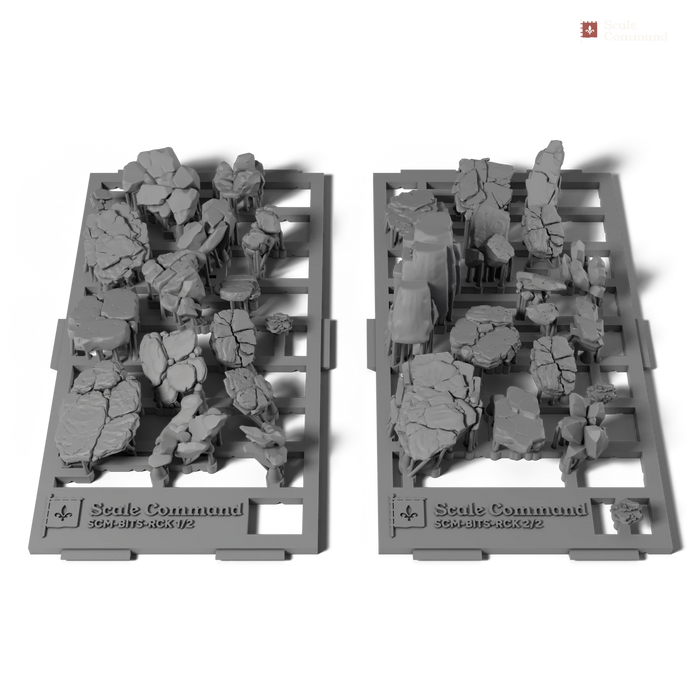
Both kinds of printer need supports wherever a part hangs over thin air, and the supports are where they look most different coming off the printer. A resin print hangs from a flat raft on a forest of hair-thin supports that touch it at tiny points, so it comes off looking much like a plastic kit on its sprue. A filament printer builds its supports out of the same plastic as the model, as chunky towers or branching trees, and they leave rougher marks where they snap away.
 Off the printer
 Off the printer
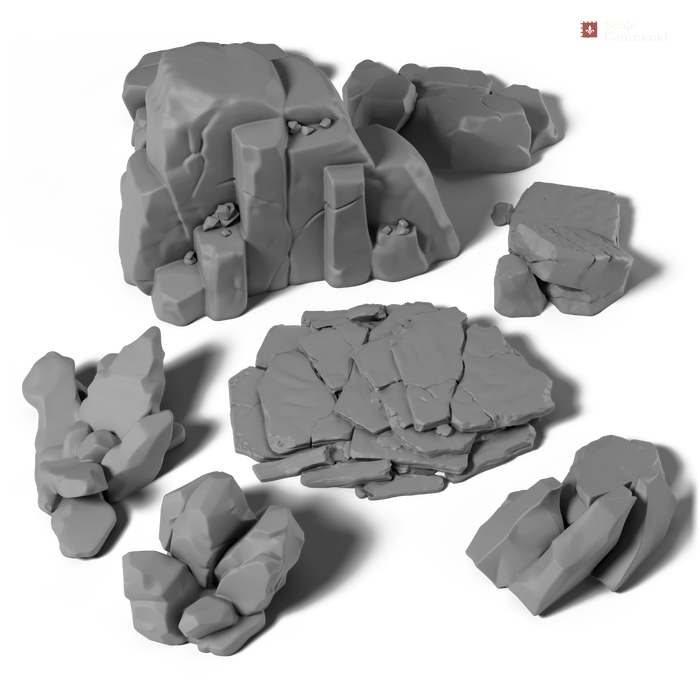
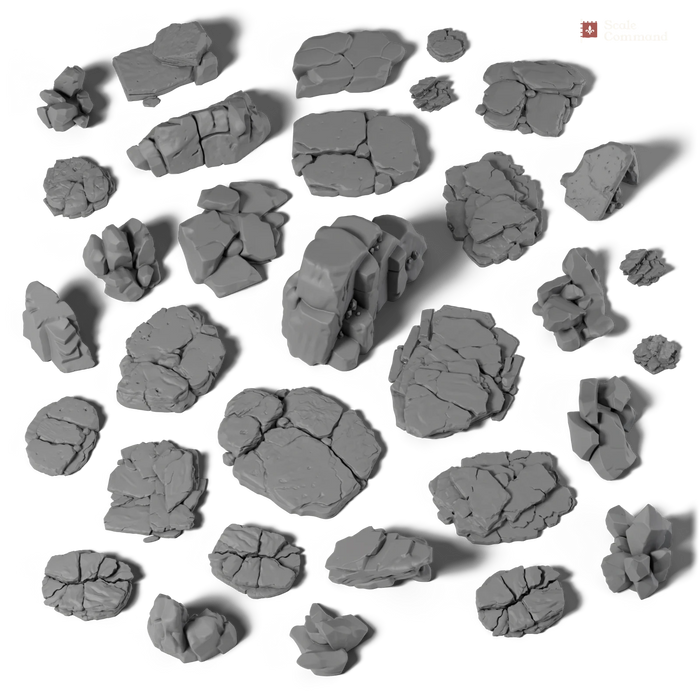
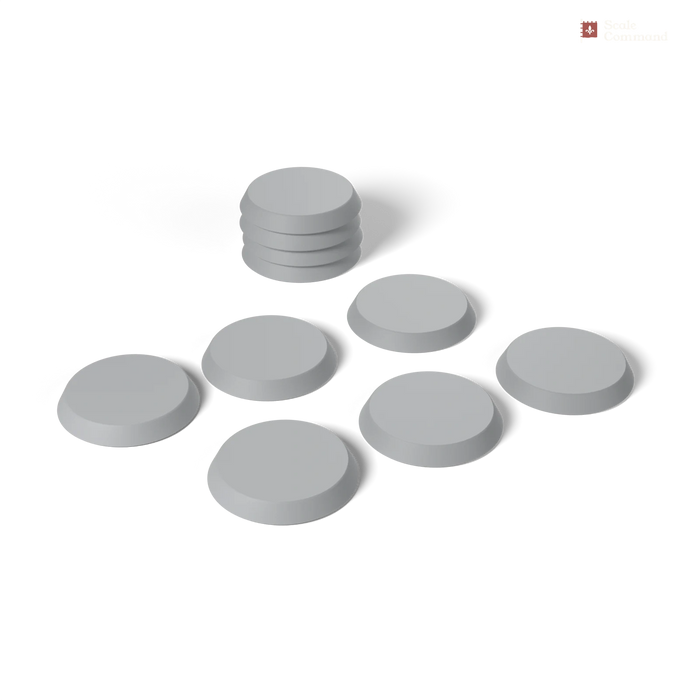
Our resin bases and basing bits ship washed and cured on their print sprue, so the delicate pieces travel safely. Snip each one free with flush cutters, scrape the small contact points smooth with a hobby knife, and it's ready to glue and prime. Resin gives them the sharp fractured faces on a Rock Clump and the crisp sloped edge on a round base.


Side by side
| What you're printing | Resin (MSLA) | Filament (FDM) | What we use |
|---|---|---|---|
| 10mm figures | Crisp faces, spears and shields | Too small to draw: blobs and broken spears | Resin |
| 28mm figures | Every detail, smooth surfaces | Soft detail, layer lines on curves | Resin |
| Texture rollers | Clean pattern all the way round | Layer lines roll into the clay | Resin |
| Bases and basing bits | Sharp edges and textures | Fine for plain bases, rough on bits | Resin |
| Detailed buildings and scatter | Best detail, needs a larger budget | Good shapes, softer detail | Resin |
| Big terrain, hills and boards | Costly, heavy, can chip | Cheap, light, tough, prints big | Filament is the better choice |
| Paint racks and organisers | Heavy, brittle, costly | Tough, light, cheap to print big | Filament |
Strength, safety and painting
Are resin miniatures fragile?
Resin is hard and rigid, about as tough as a plastic kit. Very thin parts like spears, pikes and flagpoles can snap if a model is dropped, so hold models by the base and carry them standing up in a foam-lined case; a snapped part glues back cleanly with superglue. Filament prints bend before they break, which is why they suit things that are handled roughly every day.
Is cured resin safe to touch and paint?
Liquid resin irritates skin and eyes, so printers handle it with gloves in a ventilated space, then wash each print in alcohol and cure it under UV light. Washed and fully cured resin is safe to handle and paint like any plastic miniature, and that's all you ever receive from us.
Do resin miniatures need washing before painting?
Resin prints paint like traditional miniatures: a wash in warm soapy water if they've been handled a lot, then any normal miniature primer. Filament prints show their layer lines through washes, so painters sand them or use a thick filler primer first. On terrain that's often fine, because rough stone and wood textures hide the lines anyway.
Thinking of printing at home?
How much does it cost to 3D print a miniature?
The resin in one 28mm figure costs only cents, because a figure uses a few grams. That's the number most guides quote, but it isn't the real cost of printing at home. A resin setup also needs a wash and cure station, isopropyl alcohol, nitrile gloves, a respirator mask, replacement vat film, and resin for the prints that fail, plus the hours spent setting up supports, washing, curing and clipping. Filament is far cheaper by weight and needs none of the washing kit, which is why it wins for big pieces: a paint rack or a hill in resin would cost several times as much as in filament.
Which printer should you buy?
For resin, look at ELEGOO's Mars range (smaller and cheaper, plenty for a unit at a time) and Saturn range (a bigger plate for whole armies and terrain). For filament, look at Bambu Lab's A series (open frame, easy to start with) and P series (enclosed, faster). We compare them model by model in the best 3D printer for miniatures and terrain.
If you mainly want miniatures, get a resin printer, and budget for the extras: a wash and cure station, alcohol, gloves, a mask and a ventilated space away from living areas. If you mainly want terrain, storage and hobby gear, a filament printer is easier, cleaner and cheaper to run. We ended up with one of each.
Or skip the printer. Every model in the shop is printed to order in resin in our Perth workshop from the designer's licensed files, unpainted or tabletop painted by our studio, and posted across Australia, free on orders of $50 or more.
Shop miniaturesQuestions and answers
- Is resin or filament better for 3D printed miniatures?
- Resin is better for miniatures. A resin printer's layers are 0.03 to 0.05 mm thick and its pixels are 14 to 19 microns across, so faces, mail and fingers stay sharp. A filament printer's 0.4 mm nozzle softens that detail, so filament suits terrain, storage and hobby gear instead.
- Can you print 10mm miniatures on a filament (FDM) printer?
- Not well. A 10mm figure's head is only about 1.5 mm tall and its spear about half a millimetre thick, while a filament printer draws lines 0.4 mm wide. The figures come out as blobs with broken spears, so 10mm and 15mm miniatures are printed in resin.
- Are resin miniatures fragile?
- Resin miniatures are hard and rigid, about as tough as plastic kits. Thick parts are strong, but thin spears, pikes and flagpoles can snap if a model is dropped. Hold models by the base, carry them upright in a foam-lined case, and glue any snapped part back with superglue.
- Is cured resin safe to touch and paint?
- Washed and fully cured resin is safe to handle and paint like any plastic miniature. Liquid resin is the hazard: it irritates skin and eyes, so printers wear gloves, work in a ventilated space, wash each print in alcohol and cure it under UV light.
- Is resin or filament better for wargaming terrain?
- For big, plain terrain like hills, walls, gaming boards and modular tiles, filament is better: it prints large pieces cheaply, and they're light and tough. For detailed buildings and scatter, such as a thatched cottage or a market stall, resin gives far sharper planks, stonework and props.
- Do resin prints need cleaning before painting?
- Resin prints from a good printer arrive washed and cured, so they only need a wash in warm soapy water if they've been handled a lot, then any normal miniature primer. Support marks on resin are tiny and come away with a quick scrape of a hobby knife or a touch of sanding.
Shop this article
-
 Archers
-
New
-
 Civilians
-
New
-
New
-