

Resin vs plastic miniatures (and basing bits): detail, durability, cost
Resin holds finer detail than plastic and makes whole ranges possible that would never get a plastic kit, while hard plastic is tougher, more forgiving to drop and usually cheaper per figure for popular subjects. For basing bits the same holds: resin gives sharper rock faces, crisper textures and far more variety, and plastic gives cheap, tough sprues that glue with plastic cement.

Updated 7 min readAll scales

On this page
Resin holds finer detail than plastic and makes whole ranges possible that would never get a plastic kit, while hard plastic is tougher, more forgiving to drop and usually cheaper per figure for popular subjects. For basing bits the same holds: resin gives sharper rock faces, crisper textures and far more variety, and plastic gives cheap, tough sprues that glue with plastic cement. Here's how the two compare on detail, durability, gluing, cost and choice, for figures and for the bits on their bases.
- Finer detail
- Resin
- Tougher
- Hard plastic
- Glue
- Resin: superglue. Plastic: plastic cement or superglue
- More choice
- Resin, especially for niche periods and armies
What's the difference between resin and plastic miniatures?
Plastic miniatures, usually called hard plastic, are injection-moulded polystyrene: melted plastic is forced into a steel mould under high pressure, and each shot makes a whole frame of parts, the sprue. The mould costs a great deal to cut, but once it exists each frame is cheap to make, which is why plastic boxes of 20 to 40 figures are such good value. Victrix, Perry Miniatures, Wargames Atlantic and Warlord Games all make hard plastic historical and fantasy sets.
Resin miniatures come two ways. Traditional resin is cast: liquid resin poured into a soft silicone mould, which suits small runs. 3D-printed resin, which is what we sell, is built layer by layer from liquid resin hardened by UV light, straight from the designer's digital files, so there's no mould at all. Every model in our shop is printed to order in our Perth workshop, then cleaned and cured before it ships. How resin printing works, and why we don't use filament for miniatures: resin vs filament for miniatures.
 Plastic
 Resin
Resin vs plastic miniatures side by side
| Hard plastic (polystyrene) | Resin (3D printed) | |
|---|---|---|
| Detail | Very good, but every part must slide out of a two-part steel mould, so deep undercuts get simplified | Finest: undercuts, thin straps and deep folds print as designed |
| Durability | Tough and slightly flexible; survives most drops | Hard and rigid; thin spears and weapons can bend or snap |
| Glue | Plastic cement welds parts; superglue also works | Superglue only; plastic cement does nothing |
| Assembly | Usually multi-part kits on sprues, with lots of options | Depends on the designer's files: from one piece to multi-part kits |
| Cost | Usually cheapest per figure in big boxes of popular subjects | Varies more; small runs and niche subjects cost no more to make than popular ones |
| Choice | Limited to subjects that sell enough to pay for a steel mould | Huge: any period, army or character a designer has made |
| Prep | Clip from the sprue, scrape mould lines, wash optional | Ours arrive cleaned and cured; clean up any support marks |
| Converting | Easy to cut, file and kitbash | Cuts and files well, but sand it wet and wear a mask |
Do resin miniatures have more detail than plastic?
Yes, as a rule. A steel mould opens in two halves, so every surface of a plastic part has to slide out cleanly. Designers work around that by splitting figures into more parts and flattening the deepest undercuts: the gap under a cloak, the inside of a shield strap, a hand gripping a spear shaft. A resin printer has no mould to pull out of, so a figure can be sculpted with deep folds, separate straps and fingers wrapped right round a weapon, and it prints that way.
That doesn't make every resin figure better than every plastic one. Good plastic kits are crisp, clean and very well designed, and how sharp a resin print looks depends on the sculpt and the printing. But at 10mm and 15mm, where a face is a millimetre or two tall, resin's fine layers hold faces, mail and shield designs that small plastic figures have to soften. More on the scales: 10mm, 15mm or 28mm: how to choose a scale.
Are resin miniatures more fragile than plastic?
A little, yes. Polystyrene is slightly flexible: drop a plastic spearman and the spear usually bends back. Resin is harder and more rigid, so the same drop can snap a thin spear tip or sword. Chunky parts like bodies, horses, shields and buildings are strong in either material.
In practice that means handling resin a bit more carefully: pick models up by the base, carry them standing in a foam-lined case, and keep them out of hot cars. Thin resin parts can also bend in the post; a few seconds in hot, not boiling, water and they straighten. Our resin miniatures care guide covers bent parts, breaks and pinning step by step.
What glue do resin and plastic miniatures need?
Plastic cement glues polystyrene by melting the two faces together, so the joint becomes one piece of plastic. It doesn't work on resin at all, because resin doesn't melt that way. For resin, use superglue (CA): gel to line parts up, thin to wick into a tight joint. Superglue also joins resin to plastic, so you can put a resin head or weapon on a plastic body, or resin basing bits on a plastic base.
Cost and choice: why some armies only exist in resin
A plastic kit only pays for itself if it sells in big numbers, because the steel mould is the expensive part. That's why the plastic ranges cover the popular periods and armies best, and why a big plastic box of a popular subject is usually the cheapest way to fill a unit.
3D-printed resin flips that. A model printed to order costs the same to make whether it sells ten copies or ten thousand, so designers can sculpt subjects that would never get a plastic kit: whole armies for medieval Georgia, the Nasrid emirate of Granada and medieval India, the command figures and characters a period needs, or a 10mm fantasy army complete with its monsters. You can see it in our own ranges: the 28mm Reconquista from Reconquer Designs, Ten Kingdoms Miniatures in 10, 15 and 28mm, and the 10mm fantasy range from Wakes Emporium.
Plenty of players mix the two: a plastic box for the rank and file, and resin for the characters, command and the troop types no plastic kit covers.
-
 Archers
-
Archers
-
 New
MonstersCommandWakes Emporium Morghei Witch Emperor on Alpha Arcteroptix Monsters · Command · 1 model From $29.0010mm


Resin vs plastic basing bits: are resin basing bits worth it?
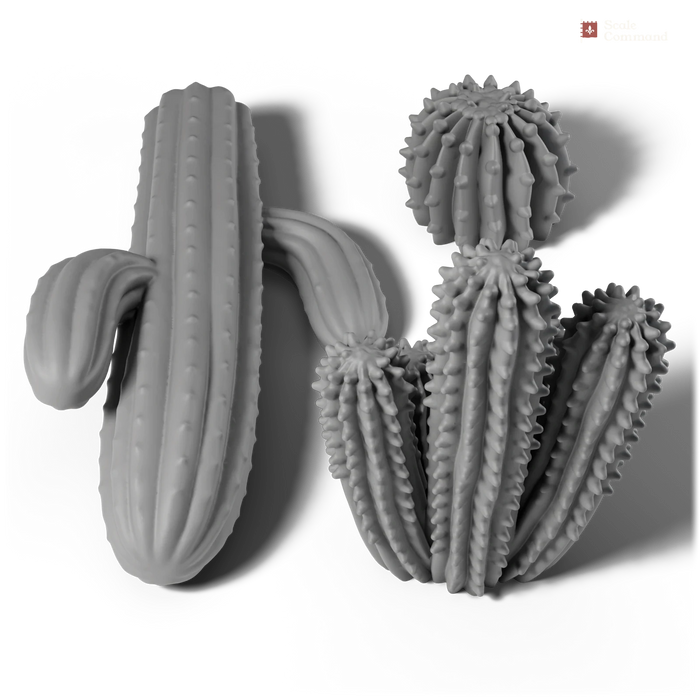
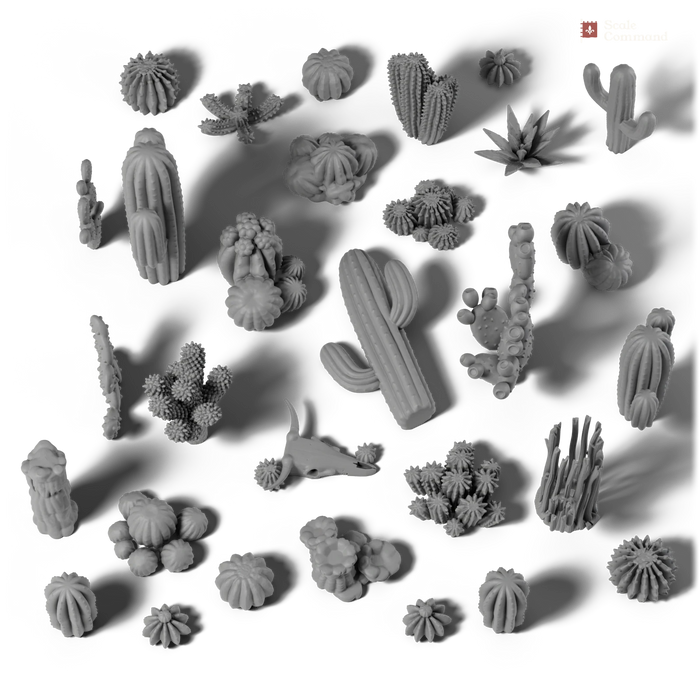
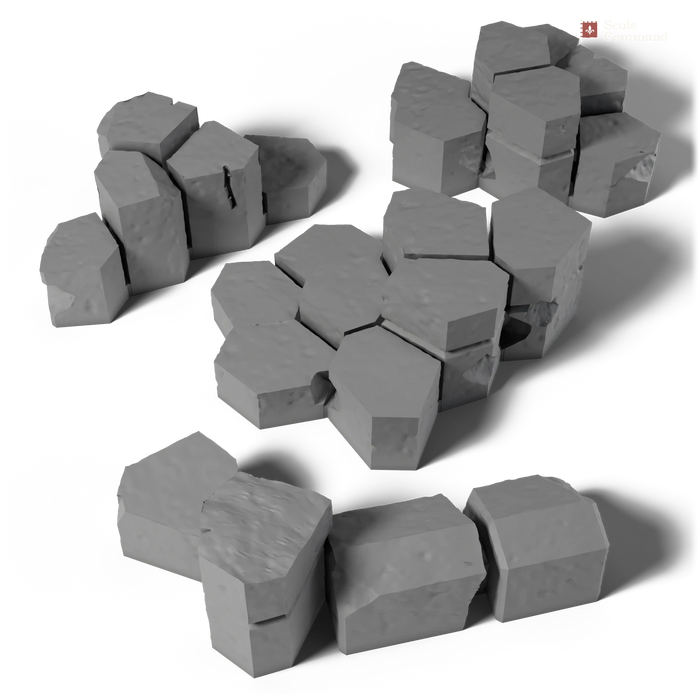
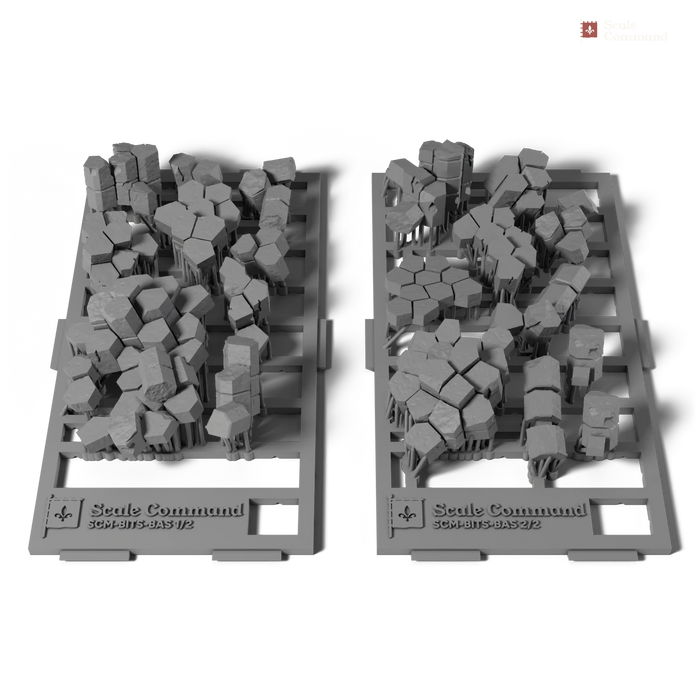
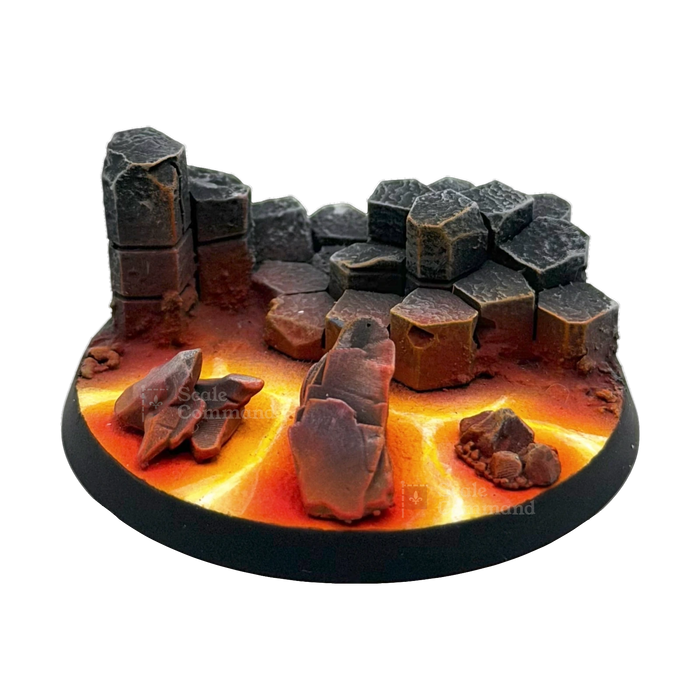
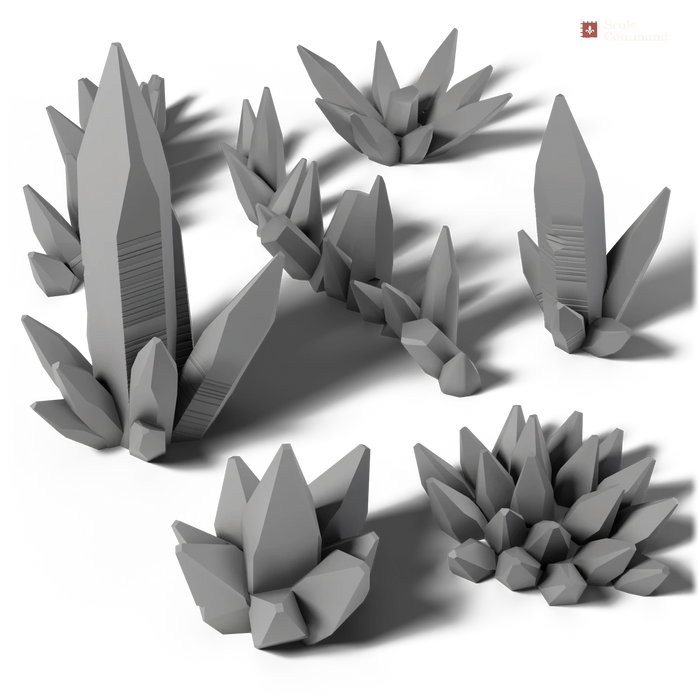
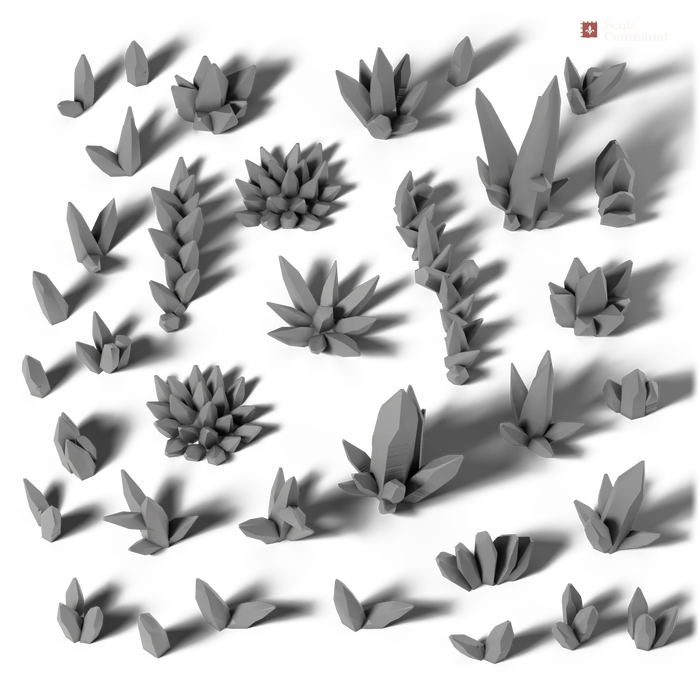
For most bases, yes. Basing bits are the rocks, stumps, skulls, crystals and ruins you glue on a base to turn it into a scene, and they show the difference between the materials more than figures do. Real rock has sharp fractured faces and broken edges, and resin prints those crisply. Plastic basing sprues have to come out of a mould like any plastic kit, so rocks tend to be smoother and flatter-backed, and a range only covers what sells in big numbers.


| Basing bits | Plastic | Resin |
|---|---|---|
| Surface detail | Smoother, softer edges | Sharp fractured faces, bark, cracks and carving |
| Variety | A few general sets | Themed packs: desert, lava, woodland, ruins, WW2 and more |
| Toughness | Tough; hard to break | Hard; thin spikes and twigs can snap if knocked |
| Glue | Plastic cement to plastic bases, superglue to anything | Superglue to resin, plastic or MDF bases |
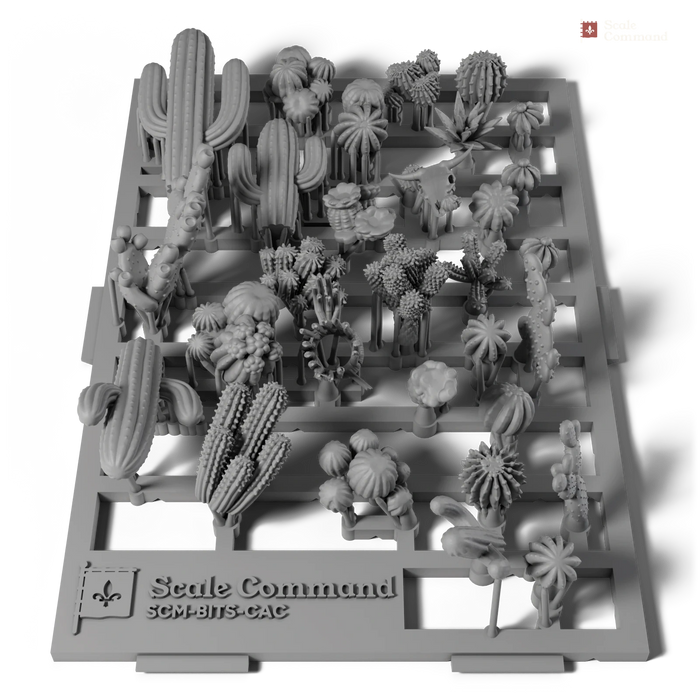
| Prep | Clip from the sprue | Ours ship washed and cured on their print sprue: snip free, scrape the contact points |
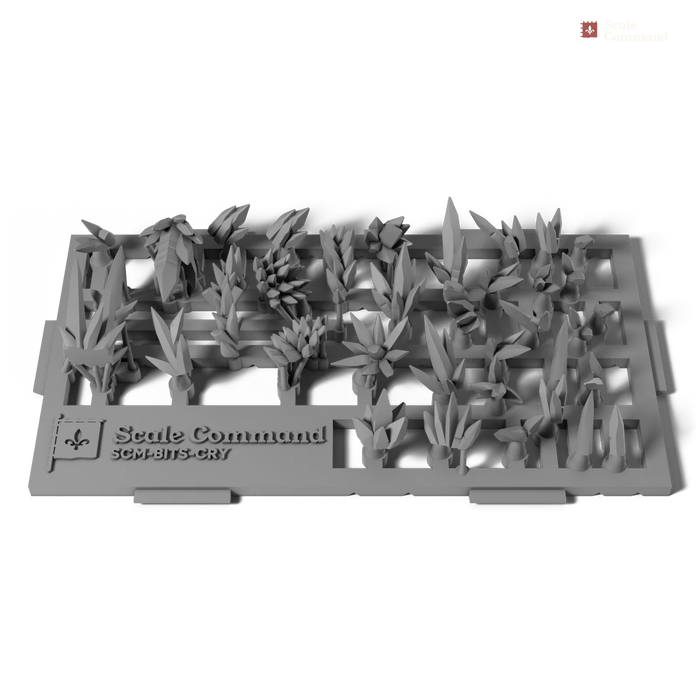
Our basing bits are our own designs for 28mm figures (they suit 32mm too), printed to order in grey resin in our Perth workshop and sold in themed packs from A$15. They come unpainted on their print sprue: snip them free, glue them on with superglue, add texture paste around them and paint them with the base. Our basing guide walks through the whole method, and basing a dwarf on basalt columns shows one base from start to finish.
Plastic still makes sense for some jobs: cheap filler rocks on a big unit's movement tray, or when you want to weld bits onto plastic bases with cement. And for the ground itself, sand, grit and tufts beat either material. Resin earns its place on the pieces people look at: the stump a scout crouches behind, the skull at a hero's feet, the outcrop under a monster.
Resin or plastic: which should you choose?
- Choose plastic for big units of popular subjects on a budget, for heavy kitbashing, and for models that get handled roughly, like a club's demo armies or games with younger players.
- Choose resin when detail matters, for characters and display pieces, for 10mm and 15mm armies where small faces need to stay sharp, and for any period or army plastic doesn't cover.
- For basing bits, resin for feature pieces and scenes; plastic or natural materials for cheap filler.
Resin, printed to order in Perth. Every miniature and basing bit in the shop is printed in resin in our workshop and arrives cleaned and cured, ready for primer, or tabletop painted by our studio.
Shop miniaturesQuestions and answers
- Are resin miniatures better than plastic?
- Resin miniatures hold finer detail, because a printed figure doesn't have to slide out of a steel mould, and they cover periods and armies that never get plastic kits. Hard plastic is tougher and usually cheaper per figure for popular subjects. Choose resin for detail and choice, plastic for big budget units.
- Are resin miniatures more fragile than plastic?
- A little. Polystyrene plastic flexes, so a dropped spear usually bends back, while resin is harder and more rigid, so a thin spear tip or sword can snap. Bodies, horses and buildings are strong in both. Pick resin models up by the base and carry them standing up in a foam-lined case.
- Can you use plastic cement on resin miniatures?
- No. Plastic cement glues polystyrene by melting the two surfaces together, and resin doesn't melt that way, so the joint never takes. Use superglue for resin: gel superglue to line parts up, thin superglue to wick into a tight joint. Superglue also joins resin parts to plastic ones.
- Why are some miniature ranges only made in resin?
- A plastic kit needs an expensive steel mould, so it only pays off for subjects that sell in big numbers. A 3D-printed resin model costs the same to make whether ten or ten thousand sell, so designers can make niche armies, command figures and characters that would never get a plastic kit.
- Are resin basing bits worth it?
- For feature pieces, yes. Resin prints the sharp fractured faces of rock, bark texture, cracks and carving crisply, and resin ranges cover far more themes than plastic basing sprues. Plastic or natural materials are fine for cheap filler. Our resin basing bits come in themed packs from A$15, printed in Perth.
Shop this article
-
Archers
-
Archers
-
 New
-
New
-
New
-
New