

Which glue holds sand and basing bits, and how to seal a base so it lasts
Use PVA (white glue) for sand and grit, then lock it down with a second coat of PVA watered down about half and half; use superglue for resin or plastic basing bits. Seal the finished base with primer and then matt varnish before the tufts go on, and fix pigment powder with a pigment fixer or a light coat of varnish.

Updated 7 min read28mm

On this page
Use PVA (white glue) for sand and grit, then lock it down with a second coat of PVA watered down about half and half; use superglue for resin or plastic basing bits. Seal the finished base with primer and then matt varnish before the tufts go on, and fix pigment powder with a pigment fixer or a light coat of varnish. Below is which glue does which job, why sand falls off, and the order of coats that makes a base survive years of handling.
- Sand and grit
- PVA, then watered-down PVA
- Resin basing bits
- Superglue, gel or thin
- Seal
- Primer, paint, matt varnish
- Tufts
- Last, after the varnish
Which glue for sand, basing bits and tufts?
Two glues cover almost every basing job: PVA for anything loose and grainy, superglue for anything solid. Here's the full list.
| What you're gluing | Glue | Why |
|---|---|---|
| Sand, grit, ballast | PVA (white glue or wood glue) | Soaks round every grain and dries clear and slightly flexible |
| Locking sand down | PVA and water, about 50:50 | Runs into the gaps between grains and glues the top layer from above |
| Resin basing bits | Superglue (gel or thin) | Bonds resin to resin, plastic, metal and MDF in seconds |
| Plastic bits on a plastic base | Plastic cement or superglue | Cement melts plastic to plastic; it does nothing to resin |
| Cork, slate, real stones | Superglue or thick PVA | Superglue for small pieces, PVA for big porous ones |
| The model on its base | Superglue | A strong joint that a dropped model won't snap |
| Static grass and flock | PVA | Grips the fibres while they stand up and dries clear |
| Grass tufts | A dab of PVA or superglue | Superglue holds at once; PVA gives a few seconds to place them |
Any PVA works: school glue, craft glue or a wood glue from the hardware store. A wood glue tends to be thicker and grabs sand well. Dedicated basing glues, such as The Army Painter's Basing Glue, are PVA-type glues in a handy bottle with a brush.
What glue should I use for sand on bases?
PVA, brushed on in a layer thick enough to stay wet while you work. Paint it over the bare base with an old brush, keeping clear of the feet and any bits, then dip the base in a tub of sand, press lightly and tap off the loose grains. Leave it until the glue has dried clear, usually an hour or two, longer for a thick layer.

If you'd rather skip the sand tub, a texture paint or texture paste does the glue and the grit in one coat. For paving, wooden floors or cracked earth, a strip of clay rolled with a texture roller glues on with PVA or superglue once it's dry.
Why does my sand keep falling off?
Sand comes off for one of four reasons, and each has a quick fix:
- Only the bottom layer is glued. The first coat of PVA holds the grains it touches. The grains sitting on top of them are only resting there, and they rub off as soon as you drybrush. Fix: the watered-down second coat, below.
- The glue was too thin. Very runny glue soaks away into the base before the sand lands. Brush on a proper wet layer, and work one base at a time.
- The sand was damp or dusty. Wet sand and fine dust stop the glue reaching the grains. Use dry sand, and sieve out the dust if you collected it yourself.
- The base is slick. PVA grips poorly on smooth, shiny plastic or resin. Scuff the top of the base with sandpaper first, or brush on a coat of primer before the glue.
How do I lock sand down so it stays on?
Once the first coat is dry, mix PVA with water about half and half, add a tiny drop of washing-up liquid to help it flow, and flood it over the sand with a soft brush. Don't scrub: let it soak in. It dries into a hard crust that glues the top grains from above. Thin superglue does the same job on a small area: a drop of thin superglue wicks through the sand and sets it rock hard in seconds.
What glue do I use for resin basing bits?
Superglue. PVA is far too weak to hold a solid resin piece, and plastic cement doesn't touch resin at all. Gel superglue gives a few seconds to position each piece; thin superglue wicks into a joint you've already pressed together. A pin-head drop per piece is plenty: too much leaves a shiny puddle that shows through paint and can turn white as it cures. Our resin care guide has more on gluing and pinning resin.

Glue the bits down before the sand or texture, so the ground flows round them and they sit in the earth rather than on top of it. The one exception is bits you've painted separately, like cacti or tufts of plants: those go on last, after the ground is painted. Whether the whole base comes before or after painting the model is its own question: see should you base before or after painting.

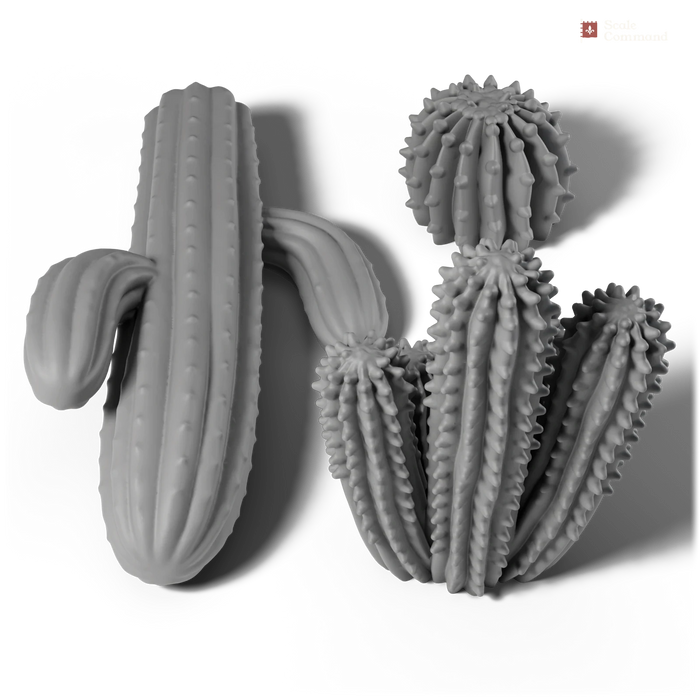
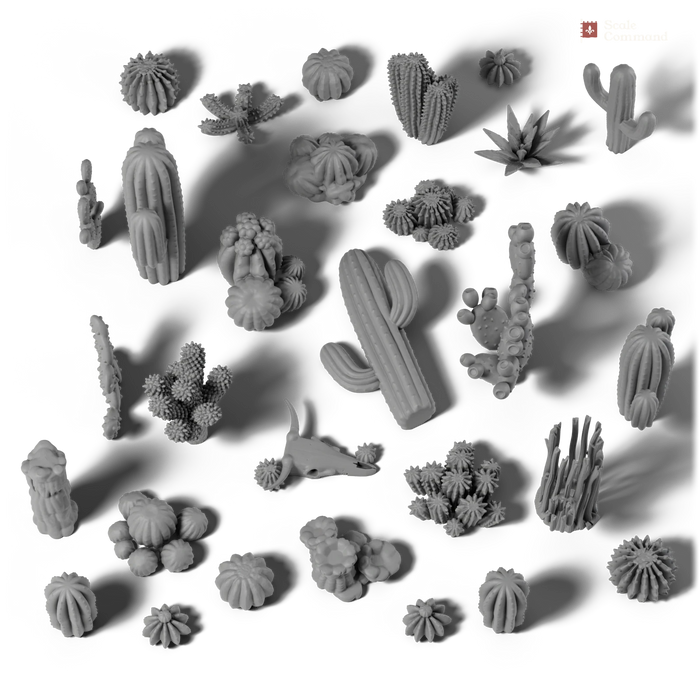
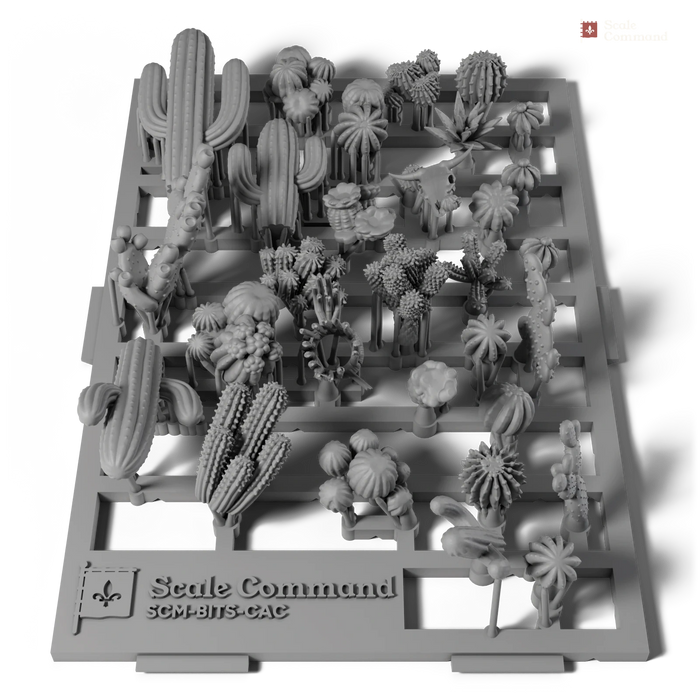
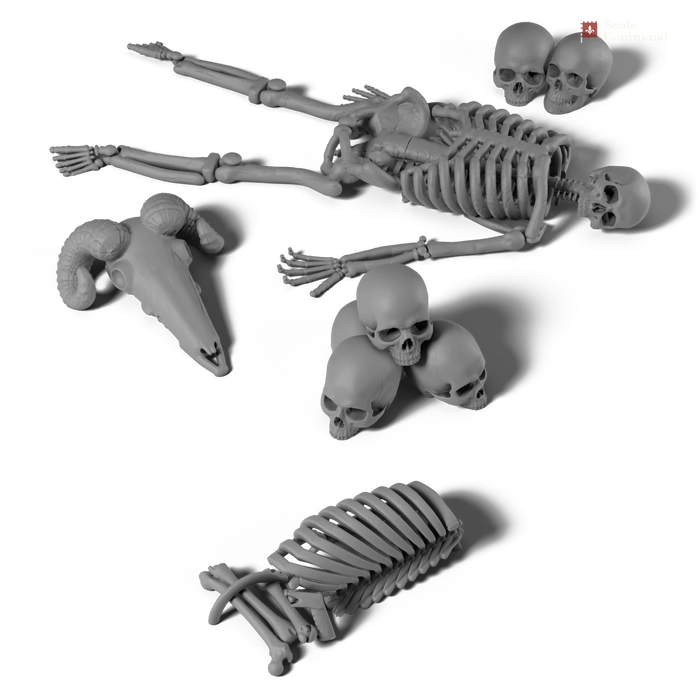
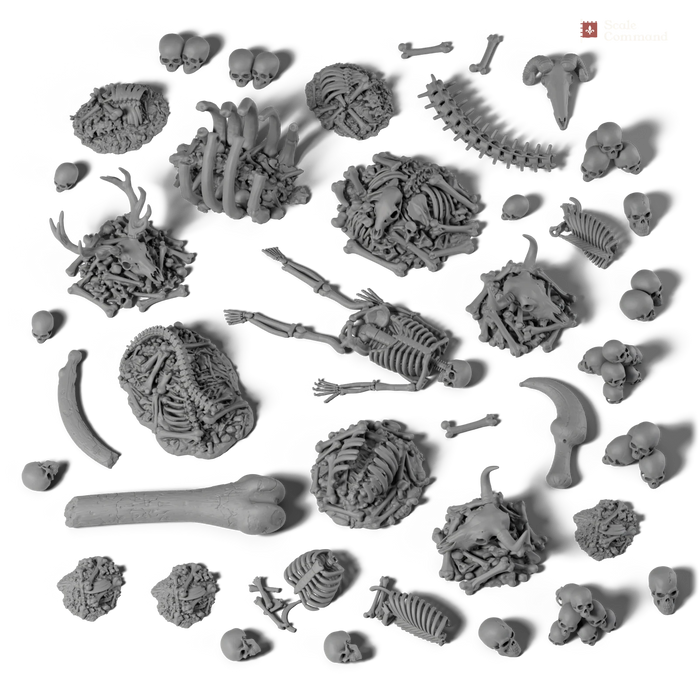
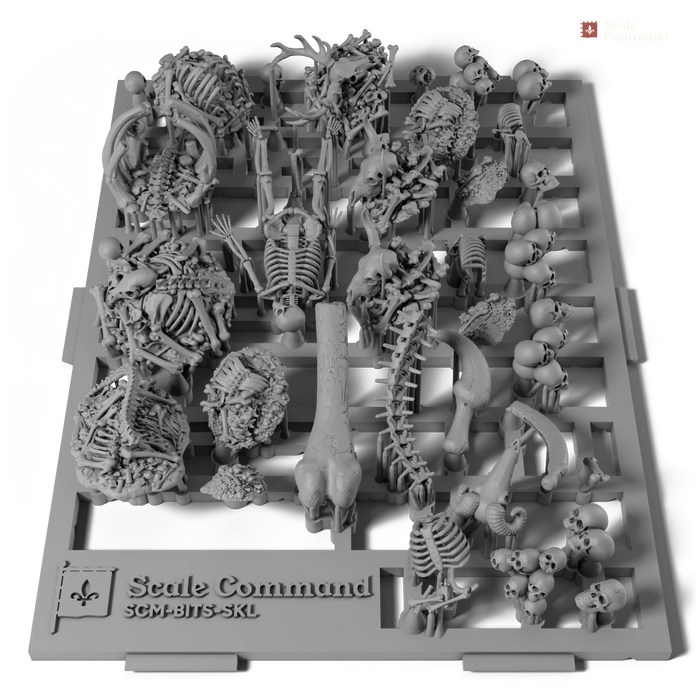
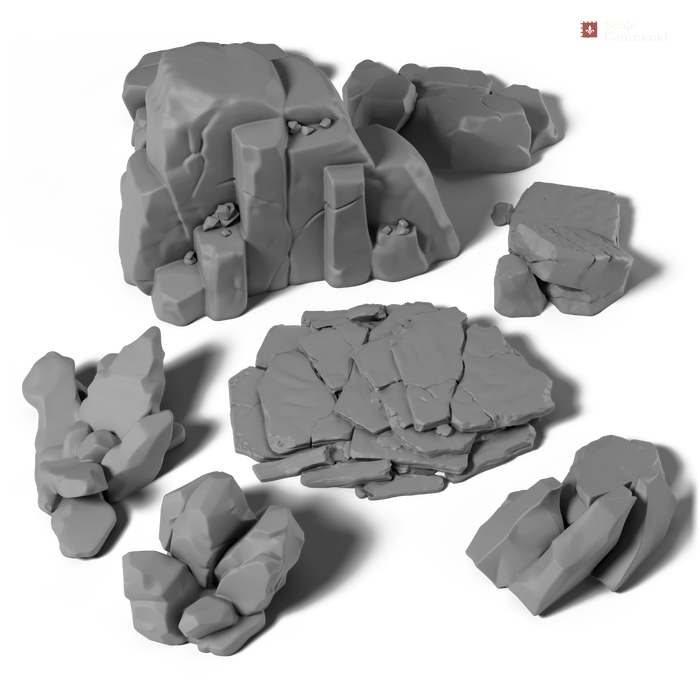
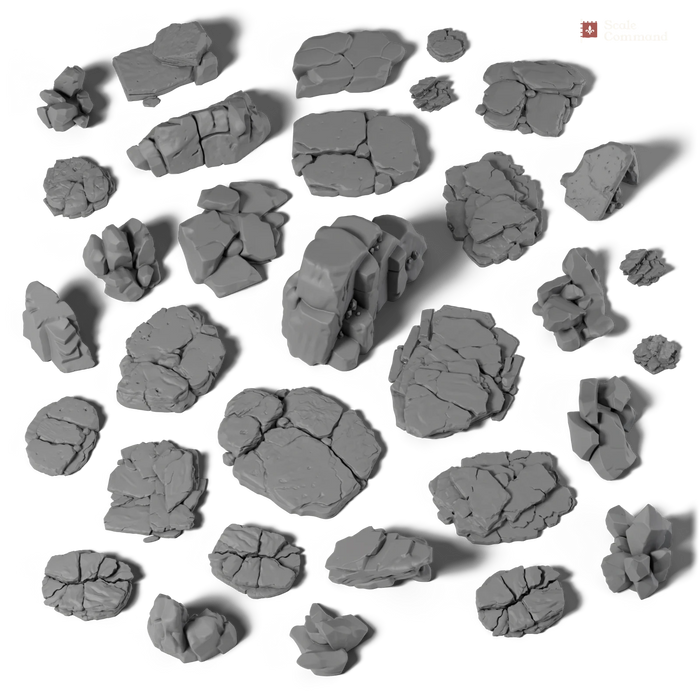
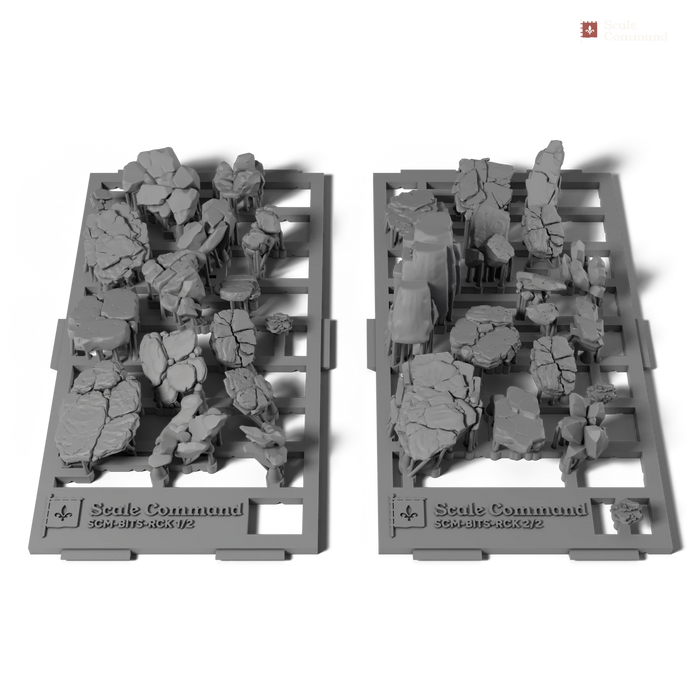
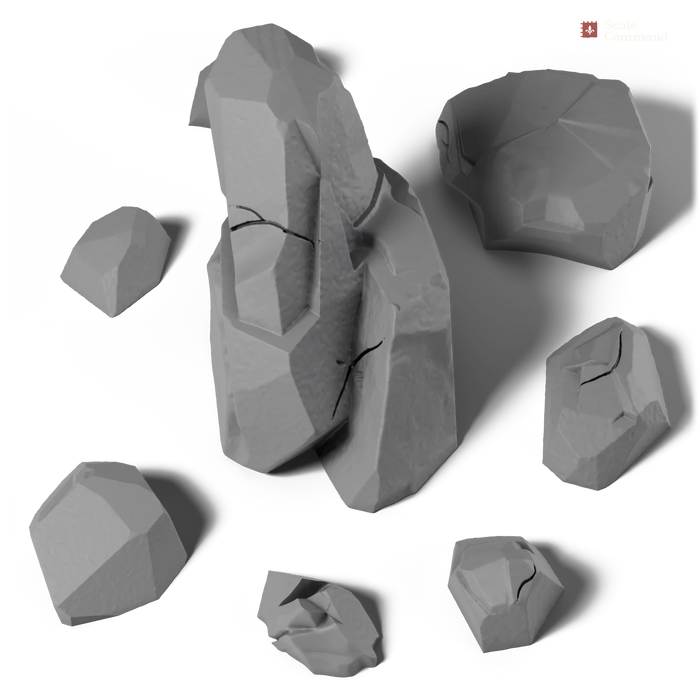
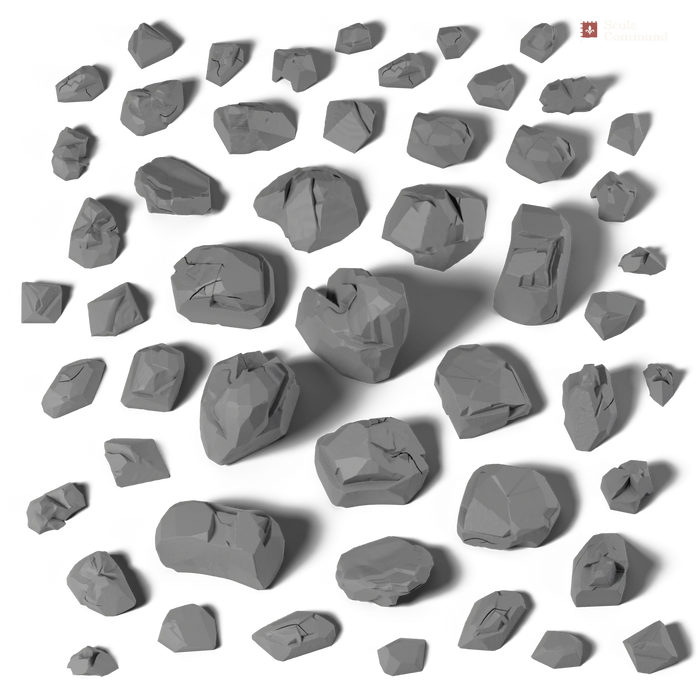
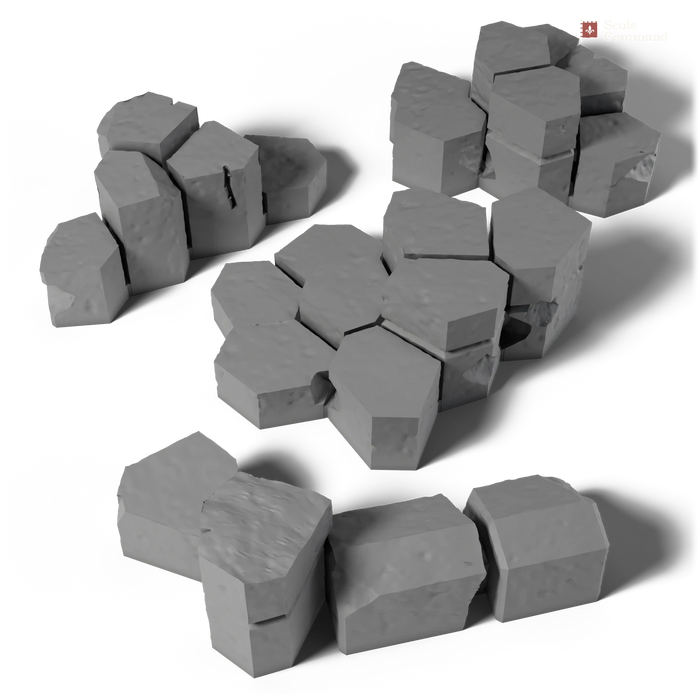
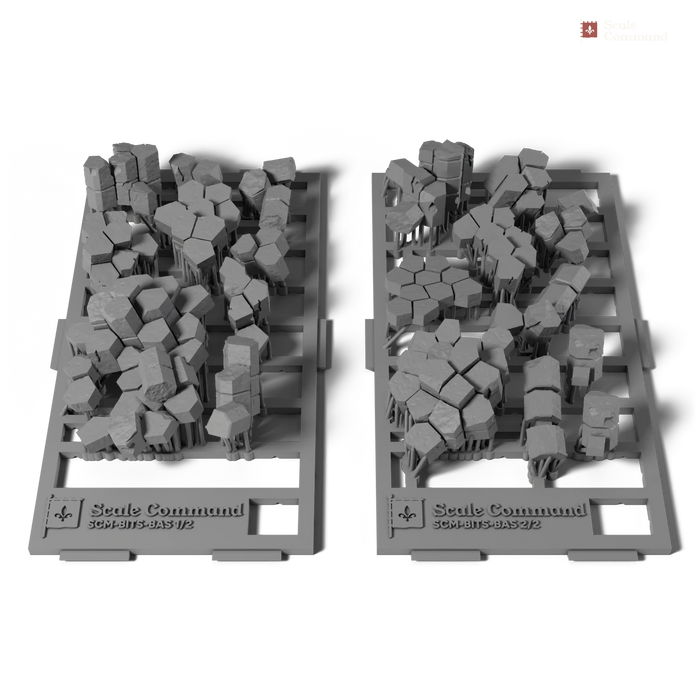
Our resin basing bits ship unpainted in grey resin, all the pieces on one sprue: snip them free, scuff the underside flat on sandpaper if it rocks, and superglue them on. Sizes and themes are in the basing guide.
How do I seal a base so it survives handling?
A base takes more knocks than the model on it: it's what fingers grab, and it scrapes along the table and other bases. Seal it in this order:
- Watered-down PVA over the sand, as above, and let it dry fully.
- Primer over the whole base and model. It glues loose grains and gives the paint something to grip.
- Paint the ground: basecoat, wash, drybrush.
- Matt varnish over everything. It protects the drybrushing from fingers and takes the shine off glue joints and washes. Spray or brush both work.
- Tufts, static grass and flowers last, after the varnish.
- Paint the rim and touch it up whenever it chips. A rim scuff is the first wear anyone notices.
For models that get handled hard, like a skirmish crew or a centrepiece that travels, brush a coat of gloss varnish on first and matt over it. Gloss varnish dries harder; the matt coat on top takes away the shine.

Do you glue tufts before or after varnish?
After. Varnish flattens static grass and tufts and can leave them shiny or darker. Varnish the base, let it dry, then press each tuft onto a small dab of PVA or superglue with tweezers. Put them against rocks and at the foot of the bits, where grass really grows. There's more on placing them in the basing guide.
How do I stop pigment powder rubbing off the base?
Pigment and weathering powders are loose dust, so they need fixing. Three ways:
- A pigment fixer. Brush the powder on dry, then touch a brush loaded with fixer to it: the liquid wicks through and sets it. AK Interactive and Vallejo both make one.
- Matt varnish. A light spray holds pigment down but darkens it and knocks back the effect, so apply the powder a bit heavier than you want the result.
- Mix it in. Stir pigment into a wash, a texture paste or thinned PVA and paint it on. It's less subtle but it can't rub off.
Common problems and quick fixes
- Sand flaking off after drybrushing: flood watered-down PVA over it, let it dry, and drybrush again.
- White marks round superglue joints: that's frosting from the glue fumes. A wash or matt varnish hides it.
- A basing bit pops off: PVA was used, or the joint was smooth. Scrape off the old glue, scuff both faces and superglue it.
- Shiny patches on the ground: glue or wash showing through. One coat of matt varnish evens the whole base out.
- Varnish dried cloudy or frosty: sprayed in humid or cold air. Wait for a dry, mild day; a second thin coat in better conditions often clears it.
- Tufts lifting off: the glue dab was too small or on varnish that wasn't dry. Re-glue with a drop of superglue.
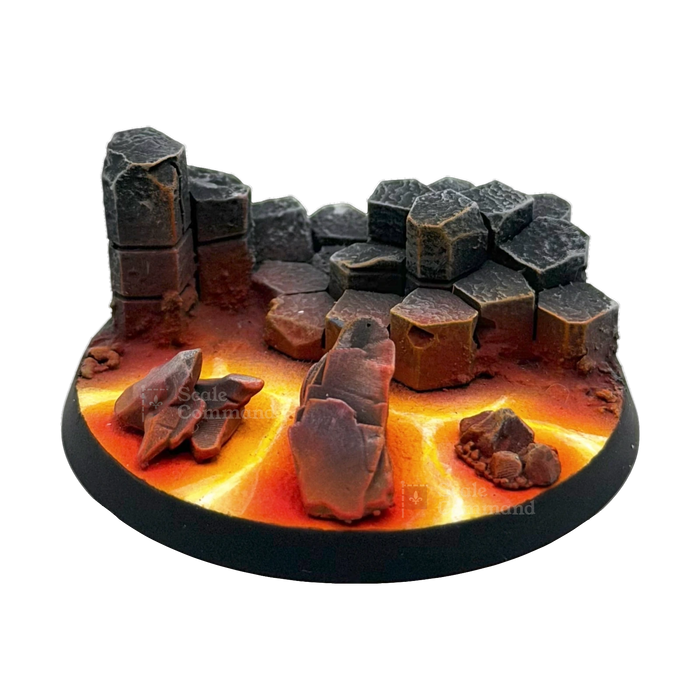
Ground that's worth sealing. Our resin basing bits come in themed packs, from desert and woodland to ruins and lava, printed to order in our Perth workshop. Standard shipping in Australia is free over A$50.
Browse the basing bits-
 New
-
New
-
New







Questions and answers
- What glue should I use for sand on bases?
- Use PVA, the white glue sold as school, craft or wood glue. Brush a wet layer over the bare base, dip it in dry sand, tap off the loose grains and let it dry clear. Then flood a mix of about half PVA and half water over the top to lock the grains down.
- Why does my sand keep falling off the base?
- Usually only the bottom layer of sand is glued, so the grains on top rub off when you drybrush. Flood watered-down PVA over the dry sand to glue it from above. Glue that was too runny, damp or dusty sand, and a smooth, shiny base can also stop it sticking.
- What glue do I use for resin basing bits?
- Superglue. Gel superglue gives a few seconds to position each piece, and thin superglue wicks into a joint you've already pressed together. A pin-head drop is plenty. PVA is too weak to hold solid resin, and plastic cement doesn't work on resin at all, so keep those for sand and plastic kits.
- How do I seal a base so it survives handling?
- Lock the sand with watered-down PVA, prime the whole base, paint it, then give it a coat of matt varnish to protect the drybrushing. For models that get handled hard, put a coat of gloss varnish on first and matt over it. Add tufts after the varnish and touch up chipped rims.
- Do you glue tufts before or after varnishing a base?
- After. Varnish flattens static grass and tufts and can leave them shiny or darker than they should be. Varnish the base, let it dry fully, then press each tuft onto a small dab of PVA or superglue with tweezers, placing them against rocks and basing bits where grass would really grow.
- How do I stop pigment powder rubbing off the base?
- Fix it. Brush the powder on dry, then touch a brush loaded with pigment fixer to it so the liquid wicks through and sets it. A light coat of matt varnish also holds pigment, but it darkens the colour, so apply more powder than you want. Mixing pigment into a wash also works.
Shop this article
-
New
-
New
-
New
-
New
-
New
-
New
-
New