


Robert the Bruce vs Sir Henry de Bohun: the axe blow that opened Bannockburn, and the 28mm model explained
According to John Barbour's poem The Bruce, on 23 June 1314 Sir Henry de Bohun spotted Robert the Bruce by the crown on his helmet and charged; Bruce stood in his stirrups and killed him with one axe blow that broke the shaft. The English Vita Edwardi Secundi agrees the king killed him with an axe. Here's what the sources really say, what every detail on our 28mm model means, and how to paint both coats of arms.

Updated 24 min read28mm

On this page
On 23 June 1314, the day before the main battle of Bannockburn, an English knight called Sir Henry de Bohun rode at the King of Scots, who was out in front of his lines on a small horse, and the king killed him with an axe. In John Barbour's famous telling, de Bohun knew Bruce by the crown on his helmet and charged; the lance missed, and Robert the Bruce stood in his stirrups and split de Bohun's helm with one blow, so hard that the shaft broke. Here's what the medieval sources really say, what every detail on our 28mm Robert the Bruce vs Sir Henry de Bohun model means, and how to paint both coats of arms correctly.
- When
- 23 June 1314, the first day of Bannockburn
- Where
- The New Park, south of Stirling
- Main source
- John Barbour's The Bruce, c.1375
- The model
- Reconquer Designs, 28mm resin, two riders

What happened between Robert the Bruce and Henry de Bohun?
In June 1314 Edward II of England marched north with a large army to relieve Stirling Castle, whose English garrison had agreed to surrender if no help came by midsummer (Battle of Bannockburn). Bruce chose to meet him in the New Park, a royal hunting park south of the castle, where an old Roman road ran up through woodland towards Stirling. His own division held the "entry" to the wood, where the road went in (Historic Environment Scotland, Bannockburn battlefield record).
On Sunday 23 June the English vanguard, under the Earls of Gloucester and Hereford, pushed up the road. In John Barbour's account (Book XII), this is what happened next:
- Bruce was riding along the front of his men on a little, lively palfrey, putting them in order, with an axe in his hand and a crown on his helmet.
- Sir Henry de Bohun, riding about a bowshot ahead of the English, recognised the king by the crown, saw how poorly he was mounted, and charged straight at him, thinking the badly mounted king an easy prize.
- Bruce turned his own horse towards him. De Bohun missed, and Bruce rose in his stirrups as they passed and brought the axe down on his head so hard that, in Barbour's words, "nouthir hat no helm mycht stynt" the blow. De Bohun fell dead, and the axe's shaft broke in two.
- The Scots, heartened by the king's blow, came forward and drove the English van back down the road.
- Afterwards Bruce's commanders scolded him for risking the whole kingdom in a single fight. Barbour says the king made them no answer and only mourned his broken axe-shaft.
That last line is why the story has lasted seven centuries: a king who could have died in the first minutes of the battle, and who only regretted the axe.
Did Bruce really kill de Bohun? Legend vs record
Almost everything people know about the duel comes from one poem. John Barbour, Archdeacon of Aberdeen, finished The Bruce around 1375, about 60 years after the battle. He was well informed but wrote to celebrate Bruce, so historians check him against the other chronicles. Here's how they line up:
| Source | Written | What it says |
|---|---|---|
| Barbour, The Bruce | c.1375, Scottish verse | The full story: the palfrey, the crown, de Bohun's charge, the stirrups, the shattered shaft and the king's lament for his axe. The only detailed account. |
| Vita Edwardi Secundi | Within about a dozen years, English Latin | Names Henry de Bohun. The Scots seemed to fall back to the wood; de Bohun chased them hoping to take Bruce, but when Bruce himself suddenly came out of the trees and de Bohun saw he couldn't hold against the crowd of Scots, he turned his horse to ride back. Bruce caught him and smashed his head with the axe in his hand. His squire died trying to defend him. (Translated in Mackenzie's notes to Barbour, Book XII.) |
| Sir Thomas Gray, Scalacronica | 1350s–60s, by the son of a knight captured that day | Says, "as was reported", that Bruce killed a knight with an axe at the entry to the Park, but calls him "Peris de Mountforth" (Maxwell's translation, pp. 52–53). |
| Lanercost Chronicle | Near-contemporary, English | Doesn't mention the duel at all, and its account of the first day is muddled (Maxwell's translation, pp. 206–208). |
So what can we say?
- Well supported: on 23 June 1314, at the entry to the New Park, the King of Scots himself killed an English knight with an axe. Barbour and two English-side sources agree on that.
- Very probable: the knight was Henry de Bohun. Barbour and the Vita both name him. Gray's "Mountforth" is the odd one out, and a John de Mountfort was killed in the battle and is listed next to Henry de Bohun among the dead, so Gray's informant may simply have mixed up two names.
- Barbour's telling: the head-on charge, the miss, the stirrups, the scolding and the king's lament for his axe. They may well be true, but only he says so.
- Disputed: whether de Bohun was charging or turning away. Barbour's charge is the more famous version; the English Vita, written much closer to the event, says he had turned back.
Historic Environment Scotland's battlefield record calls it "the stuff of legend" but, because sources from both sides tell it, concludes that "it does appear to be true".
Who was Sir Henry de Bohun?
Henry de Bohun was an English knight of the Bohun family, one of the great Anglo-Norman houses. Barbour calls him the "cosyne" of the Earl of Hereford, a word that often meant nephew at the time, and most accounts call him the nephew of Humphrey de Bohun, Earl of Hereford, who was joint commander of the English vanguard that day.
His exact parentage is less certain than most websites suggest. The University of Strathclyde's Bannockburn genealogy project thinks he was most likely a more distant kinsman, the son of John de Bohun, and records that he left a widow and no children. His age isn't recorded anywhere, so the "young knight" of many retellings is a guess.
What can you see on the model, and why is it there?
Reconquer Designs didn't sculpt a mid-swing. They sculpted the instant after the blow: the lance has passed harmlessly, de Bohun's head and body are thrown back, and the axe is in his helm. Nearly every detail on the two riders traces back to Barbour's description.
 The blow
 The crown
 on Bruce's helmet
Barbour says that on his basnet (bascinet, a light rounded helmet) Bruce wore a "hat off quyrbolle", that is cuir-bouilli, leather soaked in hot wax and oil, moulded and dried hard, with a high crown on top as a sign that he was king. De Bohun recognised him by it. The sculpt follows this closely: a domed helmet over a mail coif, ringed by a crown circlet with raised points, and Bruce's bearded face left bare.
Why would a king advertise himself like that? Barbour only says the crown was a token that he was king. Most likely it also let his own men pick him out as he rode the line giving orders. The cost was that the enemy could see him too, and in Barbour's account that is exactly what drew de Bohun's charge. Popular retellings, and even Historic Environment Scotland's record, describe a gold circlet; Barbour himself only says a high crown, so gold is a painter's choice rather than a recorded fact (it's a very reasonable one).
The axe, and why the haft is broken
Every source that mentions the kill agrees on the weapon: Barbour, the Vita and Gray all say an axe. Barbour calls it a hand-axe and says its shaft shattered in two. That's the detail the sculptor built the whole piece round. The axe head is buried in the crown of de Bohun's great helm, and Bruce's raised fist holds the splintered remains of the haft. Bruce's sword stays in its scabbard on his belt: he didn't need it.
Why is Bruce on a small horse? Palfrey vs destrier
In most printed editions Barbour says Bruce rode "ane gray palfray, litill and joly": a small, lively grey riding horse. A palfrey was a comfortable horse with a smooth gait, used for travel, display and, as here, riding up and down your lines. De Bohun came on a "steid", a trained warhorse or destrier, the kind bred and schooled for the charge. (That "gray" comes from a printed edition of 1616. The older Cambridge manuscript has "gay", meaning fine or lively, and the Edinburgh manuscript gives no colour at all, so grey is traditional, not certain.)
On the model you can see the difference in the kit rather than in the size: Bruce's horse wears riding tack, with a studded breast-strap and a quilted saddle cloth, and no trapper; de Bohun's wears a long cloth trapper and a crest on its headstall, dressed for battle. The sculptor gave both horses a similar build. That's not far wrong: a University of Exeter study of medieval horse bones found horses of the period were often under about 14.2 hands, pony-sized by modern standards, and even royal warhorses were rarely over 15 to 16 hands. The contrast in 1314 was riding horse against trained warhorse, not pony against giant.


The lion on Bruce's surcoat and shield
Bruce's figure has a lion rampant (standing on one hind leg, forepaws raised) sculpted in low relief on his shield, on the chest of his surcoat and again on his back. That's the royal arms of Scotland, not the Bruce family arms. Royal arms passed with the crown, so from his coronation in 1306 Bruce bore the arms of the kingdom. The double tressure, the thin double border of fleurs-de-lis that completes the royal arms, isn't sculpted: only the lion is raised, so the tressure is yours to paint freehand (there's a method below). The product page also lists a plain surcoat and a battle-damaged shield as options, if you'd rather paint the arms entirely by hand.
De Bohun's great helm and crest
De Bohun wears a great helm: a flat-sided, fully closed helmet with an eye-slit and a pattern of breathing holes, worn over a mail coif. It was the standard helmet of a knight in the charge, built to take a lance point, and it hid the face completely, which is why the arms on his shield and clothes mattered so much. On top sits a bushy crest, repeated on his horse's head. No record tells us what crest Henry de Bohun wore in 1314: the swan later linked with the Bohuns was a badge, not a crest. Treat the sculpted crest as the sculptor's generic one, and paint it as you like.
The square boards on his shoulders: ailettes
Those small square plates standing up from de Bohun's shoulders are ailettes, "little wings". Fixed at the shoulders, they could carry the wearer's arms, and they were in vogue from about 1250 to the middle of the 1300s, almost entirely in France and lands under French influence such as England (The Met, Fashion in European Armor, 1000–1300). Whether they were mainly for protection, for heraldic display or both is still argued over. Either way, they date the figure precisely: they're exactly right for an English knight of around 1314, and they'd look out of place a few decades later.
The couched lance and the trapper
De Bohun's lance is couched, tucked tight under his right arm, so the weight of horse and rider goes into the point. That's the classic knightly charge, and it fits Barbour's picture of de Bohun coming on with helm on head and spear in hand. His horse wears a long cloth trapper (or caparison) falling almost to its hocks, though in our group render it's hidden behind Bruce's horse. Seals of the period show knights' horses in trappers painted with the rider's arms, so painting it blue with the Bohun arms is period-correct. The trapper is sculpted plain, with no charges, so the arms are painted on.
What do the coats of arms on the model mean?
A knight in a closed helm had no face. His coat of arms, on his shield, surcoat, ailettes and his horse's trapper, told friends, enemies and heralds who he was. How seriously they took it shows in the Roll of Caerlaverock, a herald's poem from 1300 describing the banners and shields of the knights at one of Edward I's sieges in Scotland, among them the Earl of Hereford, who led the English vanguard at Bannockburn fourteen years later.
The royal arms of Scotland
Or, a lion rampant gules, armed and langued azure, within a double tressure flory-counter-flory gules. In plain words: a gold field; a red lion standing on one hind leg; blue claws ("armed") and tongue ("langued"); and a red double inner border set with fleurs-de-lis that point alternately in and out (coat of arms of Scotland).
According to the Heraldry Society's history of the royal arms, the lion rampant had stood for the sovereignty of Scotland's kings since at least Alexander II (1214–49). Around 1244 Matthew Paris drew the shield with a border of fleurs-de-lis, and under Alexander III (1249–86) it became the double tressure. The tressure is often said to record Scotland's alliance with France, but, as Wikipedia's summary of the arms notes, it was in use before the treaty of 1295 that began the "Auld Alliance", so its origin is really uncertain. The blue claws and tongue are standard in the modern blazon but don't show on every medieval picture, so treat them as an optional detail.
The Bruce family arms: Annandale
Or, a saltire and a chief gules: a gold field with a red diagonal cross (the saltire) and a red band across the top (the chief). These were the arms of the Bruce lords of Annandale, the king's family before he took the throne (Robert de Brus, 5th Lord of Annandale, the king's grandfather). Medieval seals show the design but not the colours. The colours come from the rolls of arms, the heralds' lists of arms: Parker's Glossary of Heraldry quotes a roll of Henry III's reign (1216–72) giving a Robert de Brus "d'or, ung saltoir de goules; et ung cheif de goules", red on gold. Those rolls survive only as later copies, so there's a little room for doubt, but red on gold is the recorded version. They're the right arms for a Bruce before 1306, and the wrong ones for Bannockburn: if you want "Bruce the earl" for an earlier game, use the plain surcoat option and paint these instead.
The arms of de Bohun
Azure, a bend argent cotised or between six lions rampant or. In plain words: a blue field; a white (or silver) diagonal band running from the top left corner as you look at the shield to the bottom right; a thin gold stripe on each side of it (the cotises); and six small gold lions, three on each side of the band. The Roll of Caerlaverock describes the Earl of Hereford's banner in 1300 in almost these terms: deep blue silk, a white bend between two cotises of fine gold, and six lioncels rampant (Nicolas's translation). The poem doesn't colour the lions, but they are gold in the Heraldry Society's rendering and in every later record of the arms (see the Bohun family).
We haven't found a roll of arms that gives Henry's own shield. As a junior kinsman he'd usually have borne the family arms with a small "difference" to set him apart from the earl, such as a label or a small extra charge, but nobody recorded which, so the honest description is "a version of the Bohun arms". Painting the full Bohun arms is the accepted choice.
The heraldic words, in plain English
- Tinctures: the colours. Or is gold or yellow, argent silver or white (the two "metals"), gules red and azure blue (two of the "colours").
- Rampant: a beast reared up on one hind leg, forepaws raised. A small lion is a lioncel.
- Armed and langued: the colour of the claws (and teeth) and of the tongue.
- Tressure: a thin border set in from the edge of the shield. Flory-counter-flory means it carries fleurs-de-lis pointing alternately out and in.
- Saltire: a diagonal cross, like an X. Chief: a broad band across the top.
- Bend: a band from the shield's top left (as you look at it) to its bottom right. Cotised: with a thin stripe on each side.
- Rule of tincture: never put a metal on a metal or a colour on a colour, so arms read from a distance. All three shields here obey it.
What armour did knights wear at Bannockburn?
Both riders are dressed accurately for 1314, a point halfway between the all-mail knight of the 1200s and the plate-armoured knight of the late 1300s:
- Mail was still the main defence: a hauberk (mail shirt) with full sleeves and mail mittens, mail chausses on the legs and a mail coif over the head. Both figures wear it, and the sculpted links are crisp enough to take a wash and drybrush well.
- Early plate was arriving at the joints. Look for the small rounded plates at the elbows (couters) and knees (poleyns) on both figures.
- The surcoat, a long cloth coat over the mail, split for riding and belted, carried the arms. De Bohun's flies out behind him with the speed of the charge.
- Helmets show the two jobs these men were doing: de Bohun's closed great helm for the charge, Bruce's open, lighter bascinet for commanding, with his face visible to his men.
- The heater shield, the flat-topped, pointed shield both men carry, was the knightly shield of the age and the natural canvas for arms.
What happened next at Bannockburn?
The duel was only part of a serious fight on the first day. The English push up the road through the Park was beaten back, and the Vita says the Earl of Gloucester was unhorsed. At the same time about 300 English men-at-arms under Sir Robert Clifford and Sir Henry Beaumont tried to ride round towards the castle, and the Earl of Moray's schiltron (a tight block of spearmen) beat them off. The chronicler Gray's father was captured in that fight, which is probably how his son came to know about the day (Scalacronica, pp. 52–54).
- The night: the English camped on low, wet ground beyond the Bannock Burn, which Gray calls an evil, deep, wet marsh.
- 24 June: the Scots came out of the woods in schiltrons. Lanercost, drawing on an eyewitness, says they knelt to pray first, and that the great English horses crashed into the Scottish spears "as it were into a dense forest". The Earl of Gloucester was killed charging. Barbour says Keith's small force of Scottish horse scattered the English archers, though Historic Environment Scotland suspects that's been embellished.
- The rout: the English cavalry, pressed back onto its own infantry in a cramped space, broke. Many were killed in the pursuit or drowned in the Bannock Burn and the Forth.
- Edward II was refused entry to Stirling Castle, rode for Dunbar and escaped by boat. The Earl of Hereford, de Bohun's kinsman, was captured, according to Historic Environment Scotland at Bothwell Castle, and was later exchanged for Bruce's queen, Elizabeth de Burgh, and other Scottish prisoners held in England.
How many fought? Historic Environment Scotland estimates about 6,000 to 7,000 Scottish spearmen and some 500 light horse, against perhaps 2,000 to 3,000 English heavy cavalry and up to about 16,000 foot. Barbour's figures are far higher and not believed. Where exactly the second day was fought, on the Dryfield or the Carse below it, is still argued over.
What it won: Bannockburn gave Bruce Stirling Castle and effective control of Scotland, but not peace. The war dragged on; the Declaration of Arbroath (1320) pressed Scotland's case with the Pope, and England finally recognised Bruce as king in the Treaty of Edinburgh–Northampton in 1328. Bruce died the next year. His body lies at Dunfermline, and his heart is believed to be buried at Melrose Abbey. Today the first day's ground is around the National Trust for Scotland's Bannockburn visitor centre and the Borestone, where Pilkington Jackson's 1964 statue of Bruce on horseback stands.
What do films and retellings get wrong?
- "A golden crown on his great helm." Barbour says a high crown on a leather hat over a bascinet, an open helmet, not a great helm, and he never says gold.
- "Bruce simply sidestepped." Barbour only says de Bohun missed, and has Bruce riding at him too; the sidestep is a modern retelling. The English Vita has de Bohun turning back when Bruce caught him, and Gray names a different knight.
- Braveheart. The 1995 film shows Bruce betraying Wallace at Falkirk in 1298, which didn't happen, and squeezes years of war into a sudden charge at the end (The Scotsman's list of its inaccuracies).
How do you paint Bruce and de Bohun's coats of arms?
Paint names are Warhammer Colour (the paints Games Workshop sold as Citadel until 2026, same pot names), with The Army Painter and Vallejo swaps. We haven't painted this model in our studio yet, so these are our suggested recipes, not a record of a finished piece. The colour dots are a guide only.
The model
- Robert the Bruce vs Sir Henry de Bohun, printed to order in resin
- Spare heater shields to practise freehand on first
Heraldic paints
- Or: Averland Sunset, Yriel Yellow, Retributor Armour
- Gules: Mephiston Red, Evil Sunz Scarlet
- Azure: Kantor Blue, Macragge Blue
- Argent: Grey Seer, Corax White
- Swaps: The Army Painter Daemonic Yellow, Pure Red, Ultramarine Blue; Vallejo Model Color Flat Yellow, Flat Red, Dark Prussian Blue
Brushes and tools
- A fine detail brush (size 0 or 00) with a good point, for lines and lions
- A wet palette, so thinned paint stays workable
- A sharp 2H pencil or a pale grey paint for sketching the layout first
Heraldry on a miniature should look the way it did on the field: flat, bright and high-contrast, readable from across the table. Shade it lightly. Or can be painted yellow or metallic gold, and argent white or silver; medieval painters used both. On cloth (surcoats and trappers), yellow and white read best. Save the metallics for the crown and fittings.
Recipe card: the royal arms of Scotland (Bruce)
In order, left to right
- Gold field
- Base Averland Sunset, two thin coats
- Shade Seraphim Sepia in the folds only
- Layer Yriel Yellow
- Red lion
- Base Mephiston Red into the raised lion
- Shade Carroburg Crimson, a little, round the edges
- Edge Evil Sunz Scarlet on the top edges
- Claws, tongue
- Dot Macragge Blue (optional)
- Tressure
- Lines Mephiston Red, thinned, freehand
- Crown
- Base Retributor Armour
- Wash Agrax Earthshade
- Edge Liberator Gold
Recipe card: the arms of de Bohun
In order, left to right
- Blue field
- Base Kantor Blue
- Shade Drakenhof Nightshade in the trapper's folds
- Layer Macragge Blue, then Calgar Blue on the raised folds
- White bend
- Base Grey Seer
- Layer Corax White, leaving grey at the edges
- Gold cotises, lions
- Base Averland Sunset
- Layer Yriel Yellow
- Crest
- Any No record survives: pick one of the arms' colours
Recipe card: horses, mail and wood
In order, left to right
- Grey palfrey
- Base Dawnstone
- Wash Nuln Oil
- Drybrush Administratum Grey
- Dapples Grey Seer, small stippled rings
- Mane, tail Mechanicus Standard Grey
- Base Leadbelcher
- Wash Nuln Oil
- Drybrush Leadbelcher, lightly
- Lance, haft, straps
- Base Steel Legion Drab (wood) or Rhinox Hide (leather)
- Wash Agrax Earthshade
- Edge Baneblade Brown
How do you paint heraldry freehand at 28mm? Step by step
-
Paint the field first, and paint it smooth
Every charge sits on the field, so get the gold (Bruce) or the blue (de Bohun) flat and even, in two or three thin coats rather than one thick one. Yellow covers badly over grey: a coat of Wraithbone under Averland Sunset makes it far easier.
-
Bruce's lion: use the relief
The lion is sculpted, so you're colouring in, not drawing. Paint the whole raised lion Mephiston Red, then tidy the gold back round it with a fine brush. On the surcoat, do the back lion too.
-
The double tressure: two lines and some dots
Thin your red to the consistency of milk. Pull one line about 1 mm inside the shield's edge, following its shape, then a second line just inside the first. Rest your painting hand on your other hand and pull the brush towards you, turning the shield, not your wrist. Then add tiny red dots or three-dot trefoils along the pair, alternately on the outside and the inside: at 28mm that reads as fleurs-de-lis. If your lines wobble, a single neat line is better than a messy double one, or leave the tressure off: plenty of painters do.
-
De Bohun's bend: mark it before you paint it
Sketch the bend with a pale grey line from the top left corner of the shield (as you look at it) to the bottom right, about a third of the shield's width. Fill it with Grey Seer, then Corax White. Then run a thin gold line along each edge, with a hair of blue left between the gold and the white: those are the cotises.
-
Six lions at a few millimetres tall
You can't paint a detailed lion 2 mm high, and you don't need to. Paint each one as a small gold blob for the body with a short upward stroke for the raised forepaws and a curl for the tail, three above the bend and three below. From arm's length they read as lions. Heraldic transfers are another route if you'd rather not paint them.
-
Repeat the arms on the trapper and ailettes
A knight's arms appeared on everything, so paint the trapper blue with the bend and, if you're brave, the lions, and give the ailettes either the full arms or just blue with the white bend. Do the trapper last, after the horse, because it's the biggest area and the easiest to touch up.
-
Finish with a matt varnish
Bright heraldic colours look plasticky under gloss. A matt varnish knocks the shine off and protects the freehand from handling.
How do you base it as a Bannockburn vignette?
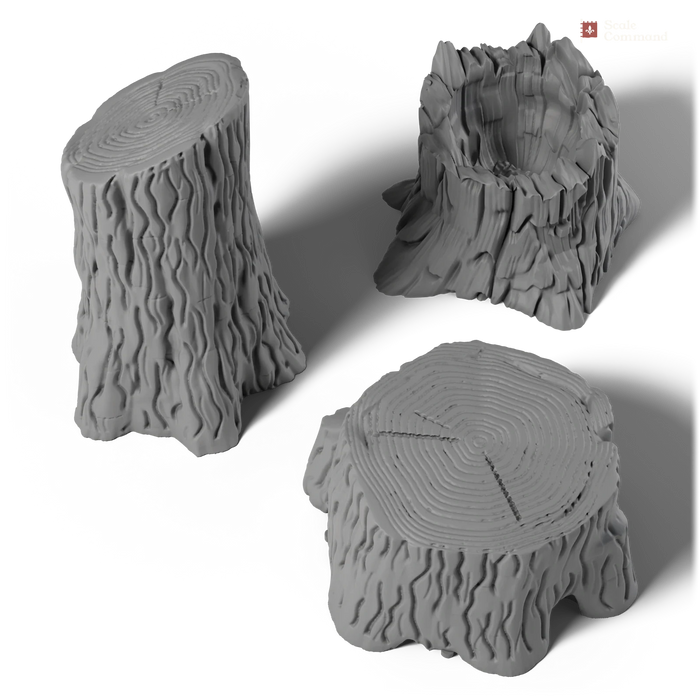
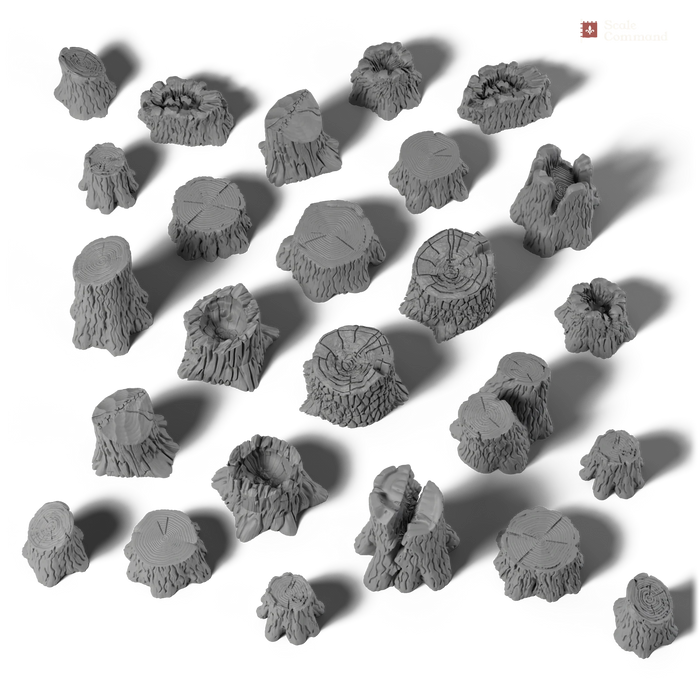
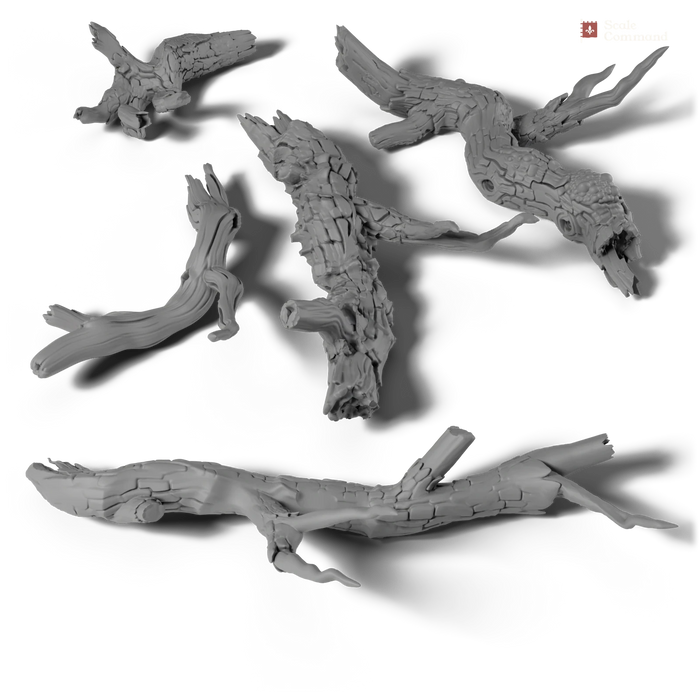
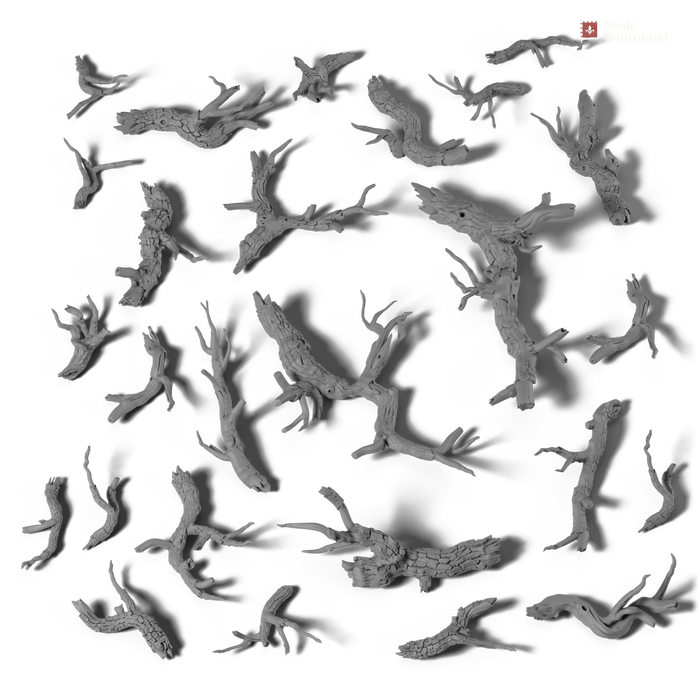
The duel happened on a road running into woodland, so give it a woodland edge. Our Tree Stump and Gnarled Branch basing bits set the scene at the edge of the New Park, and a few Small Rocks break up the road. Our guide to basing miniatures covers the earth, rocks and tufts step by step, and when it's done, here's how we photograph 28mm figures.
-
 New
-
New




To build a 14th-century force round the two riders: we file this model in our Reconquista range, Reconquer Designs' 14th-century knights and soldiers, mostly from Castile and Granada, because the armour is the same period. Their 14th Century Knights Clashing, the Mid 14th Century Knights Set B, Charging and the Jousting and Tournament Scene (more lances, crests and trappers to paint with arms) sit well beside it. For another famous knight of the century, there's Bertrand du Guesclin, Mounted; and since the Vita says de Bohun's squire died trying to save him, the 14th Century Page and Squire make a fitting addition. See the whole range in Reconquer Designs 28mm, or browse 28mm historical and command and characters. New to the scales? Here's how 10mm, 15mm and 28mm compare.
-
 Heavy cavalry
-
CommandHeavy cavalry
-
Civilians


Rather we painted the heraldry? Robert the Bruce vs Sir Henry de Bohun is printed to order in resin from Reconquer Designs' licensed files. Order it unpainted for your own brushes, or Tabletop Painted by our studio.
See the modelSources and further reading
- John Barbour, The Bruce, ed. W. M. Mackenzie (London, 1909), Book XII and notes, including the translated passage from the Vita Edwardi Secundi: Project Gutenberg. The Scots text of the duel with a summary: Scots Language Centre. Modern edition and translation: A. A. M. Duncan (Canongate, 1997).
- Sir Thomas Gray, Scalacronica, trans. Sir Herbert Maxwell (Glasgow, 1907): Internet Archive.
- The Chronicle of Lanercost, trans. Sir Herbert Maxwell (Glasgow, 1913): Internet Archive.
- Historic Environment Scotland, Inventory of Historic Battlefields: Bannockburn (BTL4), and Three things about the Battle of Bannockburn.
- G. W. S. Barrow, Robert Bruce and the Community of the Realm of Scotland, 4th edn (Edinburgh University Press, 2005).
- University of Strathclyde, Bannockburn project: Sir Henry de Bohun.
- J. W. McWilliam, The Royal Arms of Scotland, and The Siege of Caerlaverock, The Heraldry Society.
- The Roll of Caerlaverock, trans. N. H. Nicolas (1828): De Re Militari.
- Lucía Díaz Pascual, "The Heraldry of the de Bohun Earls", The Antiquaries Journal 100 (2020), 141–164: doi.org/10.1017/S0003581520000049.
- J. Parker, A Glossary of Terms Used in Heraldry (1894), "Tincture" and "Saltire": DrawShield (Tincture), DrawShield (Saltire).
- The Metropolitan Museum of Art, Fashion in European Armor, 1000–1300.
- University of Exeter, Medieval warhorses were surprisingly small (2022), and the Warhorse Project blog.
- National Records of Scotland, What is the Declaration of Arbroath?
- Historic Environment Scotland, Melrose Abbey.
- Wikipedia: Coat of arms of Scotland, Bohun family, Robert de Brus, 5th Lord of Annandale, Elizabeth de Burgh, Treaty of Edinburgh–Northampton.
- The Scotsman, 10 Braveheart inaccuracies.
Questions and answers
- Did Robert the Bruce really kill Henry de Bohun with an axe?
- Very probably. John Barbour's poem The Bruce and the English Vita Edwardi Secundi both say the king killed Henry de Bohun with an axe on 23 June 1314. Sir Thomas Gray agrees a knight died by Bruce's axe but names him differently. Historic Environment Scotland concludes that, with sources from both sides telling it, the story appears true.
- Was Henry de Bohun the Earl of Hereford?
- No. Henry de Bohun was a kinsman, usually called the nephew, of Humphrey de Bohun, Earl of Hereford, who jointly led the English vanguard at Bannockburn. The earl survived the battle, was captured afterwards and was later exchanged for Bruce's queen, Elizabeth de Burgh, and other Scottish prisoners held in England.
- What was Robert the Bruce's coat of arms?
- As king from 1306, Bruce bore the royal arms of Scotland: a red lion rampant on a gold field inside a red double tressure set with fleurs-de-lis. Before he became king, the Bruces of Annandale used a gold shield with a red saltire and a red chief across the top, colours recorded in medieval rolls of arms.
- Why did Robert the Bruce wear a crown on his helmet?
- Barbour says Bruce wore a high crown on a hardened leather hat over his bascinet as a token that he was king. Most likely it let his own men pick him out as he rode the lines. In Barbour's account the same crown let Henry de Bohun recognise him, which is why the English knight charged.
- What horse was Robert the Bruce riding at Bannockburn?
- Barbour describes a little palfrey, usually printed as grey: a lively riding horse used for travel and for riding along the lines, rather than a trained warhorse. Henry de Bohun rode a steed, a warhorse schooled for the charge. Medieval horses were small by modern standards, so this was riding horse against warhorse, not pony against giant.
- How do you paint the de Bohun coat of arms on a miniature?
- Paint the shield and trapper blue, for example Warhammer Colour Kantor Blue. Add a white diagonal band from the top left corner as you look at it to the bottom right, then a thin gold line along each edge. Finish with six small gold lions, three either side of the band, painted as simple shapes.
Shop this article
-
CavalryCommandReconquer Designs Robert the Bruce vs Sir Henry de Bohun Cavalry · Command · 2 models From $22.0028mm
-
Heavy cavalry
-
CommandHeavy cavalry
-
Civilians
-
New
Command
-
New
-
New
-
New


